
Her på Blåvand's blog bringes korte nyheder i dagbogsformat om livet og hændelser på fuglestationen.
-
FORSIDE

- Blog
Many new moths species for the season but few birds
lørdag 2. maj 2026
IN PROGRESS
Observations :
The southerly wind has brought us a large number of red-throated divers migrating northwards!
This is the largest number recorded since the start of the season – 573 in total. We were delighted to see them arriving in flocks of up to 30, high on the horizon.
We also spotted, amongst the flocks of common terns/ arctic terns (which numbered 490 today), two black terns quite close by and several little gulls.
Highlights of the day :
Red-throated loon [rødstrubet lom] - 573
Common tern/Arctic tern [fjordterne/havterne] - 490
Sandwich tern [spliiterne] - 46
Black tern [sortterne] - 2
Black-headed gull [hættemåge] - 57
Little gull [dværgmåge] - 5
Todays observations can be seen here.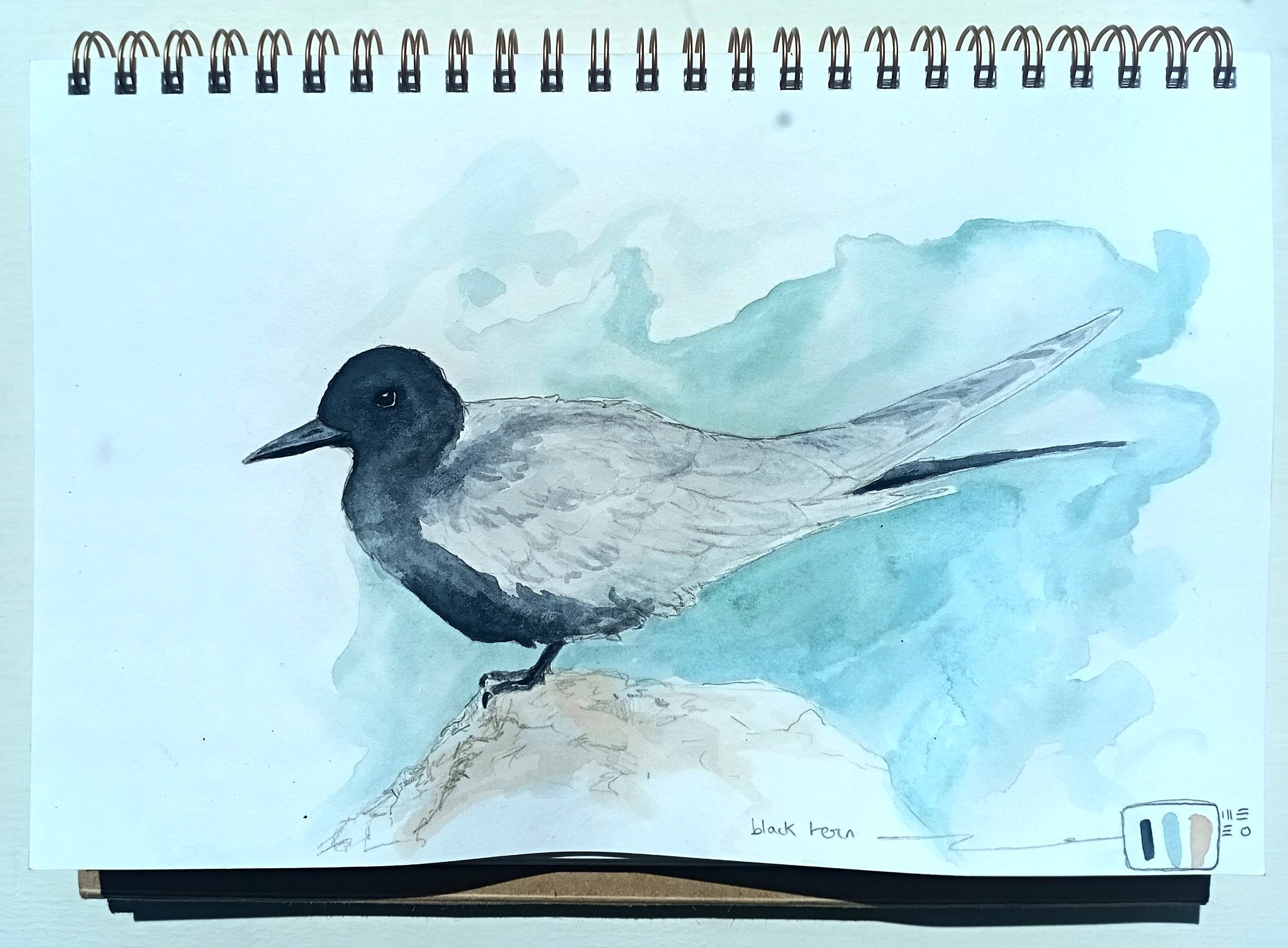
Black tern [sortterne] resting, drawing by Clara
Ringing :
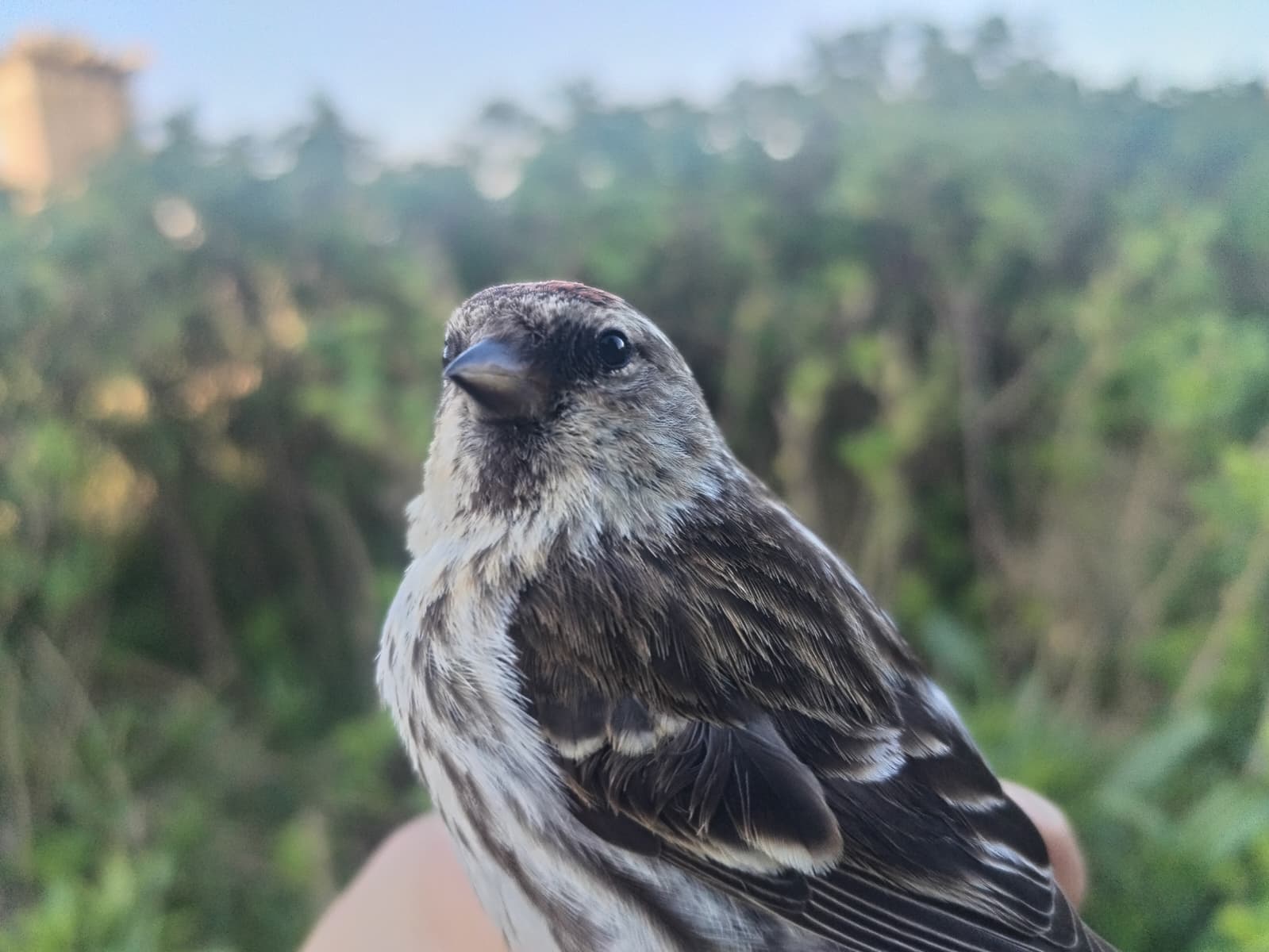 Lille Gråsisken, picture by Hanelie.
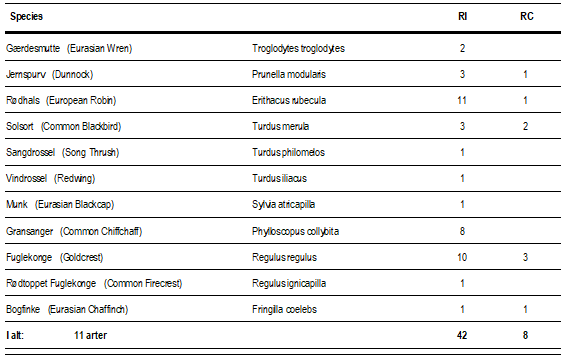
Although the wind was coming from the south this morning, we did not catch so many birds today. But While Redstarts “Rødstjert”, Pied Flycatchers “Broget Fluesnapper” and Common Whitethroats “Tornsanger” did not show up today, There were still Chiffcaffs “Gransanger” and Willow Warblers “Løvsanger” and Lesser Whitethroats “Gærdesanger”, the two last could be sampled for the West-Nile Virus. Morten left to Aarhus today, but he will be back for more sampling on Monday. There was also a ringing tour this morning, and the participants were lucky enough to see a female Starling “Stær” in hand. She also behaved well and did not scream.
Little tern project :
This morning, Joseph and I visited the exclosure for the second time to do the observations, and the difference compared to yesterday was enormous. In the first 20 minutes alone, we had more landings in the fence (7) than we did during the entire observation yesterday. The terns were very active, frequently displaying courtship behavior and making multiple attempts to build some nests. In total, about 20 individual little terns, of wich 7 were color ringed, were seen today. There were also a total of 44 landings within the exclosure.
One of the color-ringed terns we saw during the observation was Y5J. This tern was first spotted by Joseph at the shoreline, where he was presenting a fish to tern U14 with great success, as can be seen in the picture below. 30 minutes after his successive courtship attempt, he was seen scraping the sand in the exclosure in an attempt to make a nest, which was really nice to see.
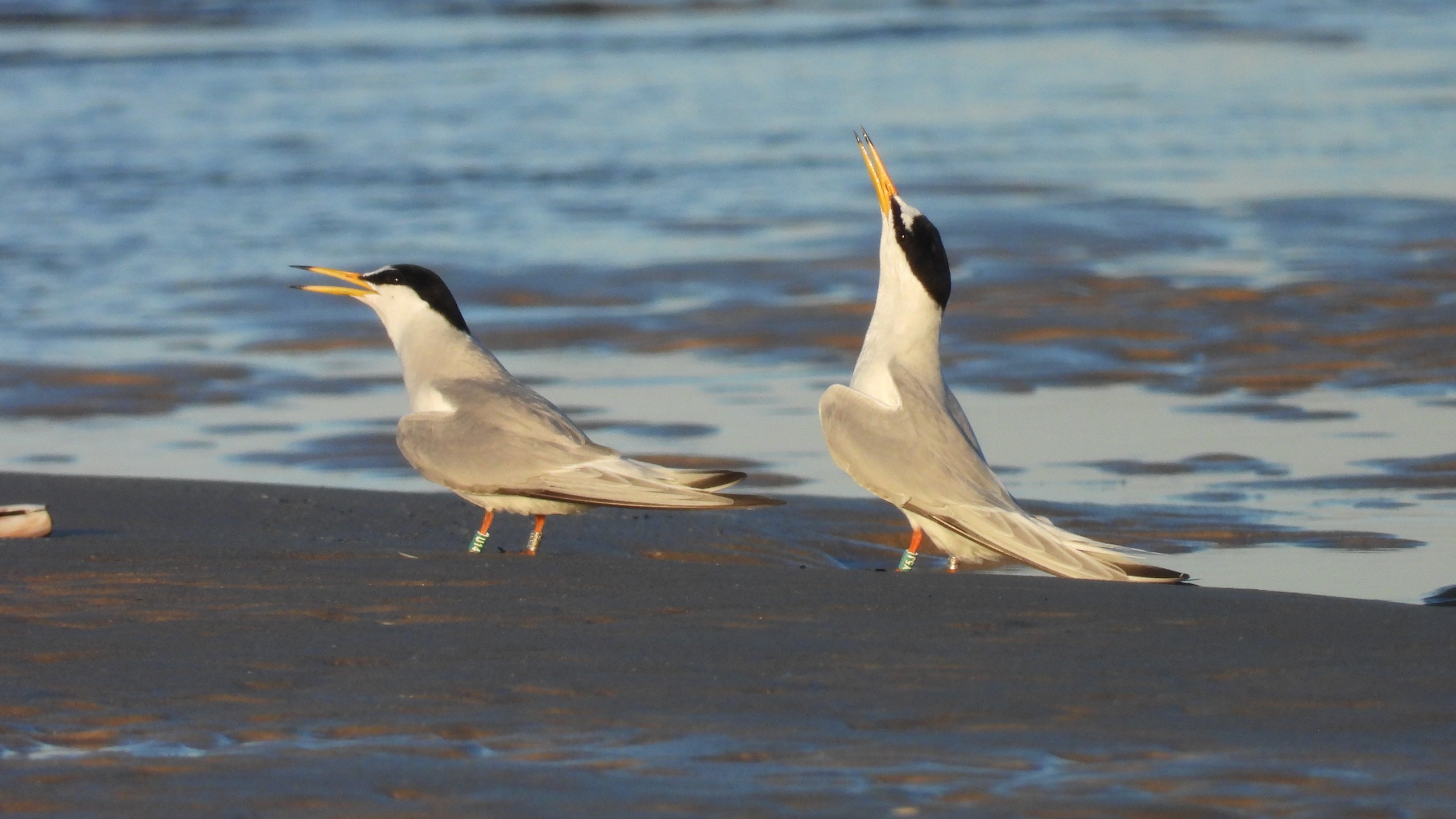
Little tern Y5J and U14 after a successfull courthship attemt, picture by Joseph Stephan.
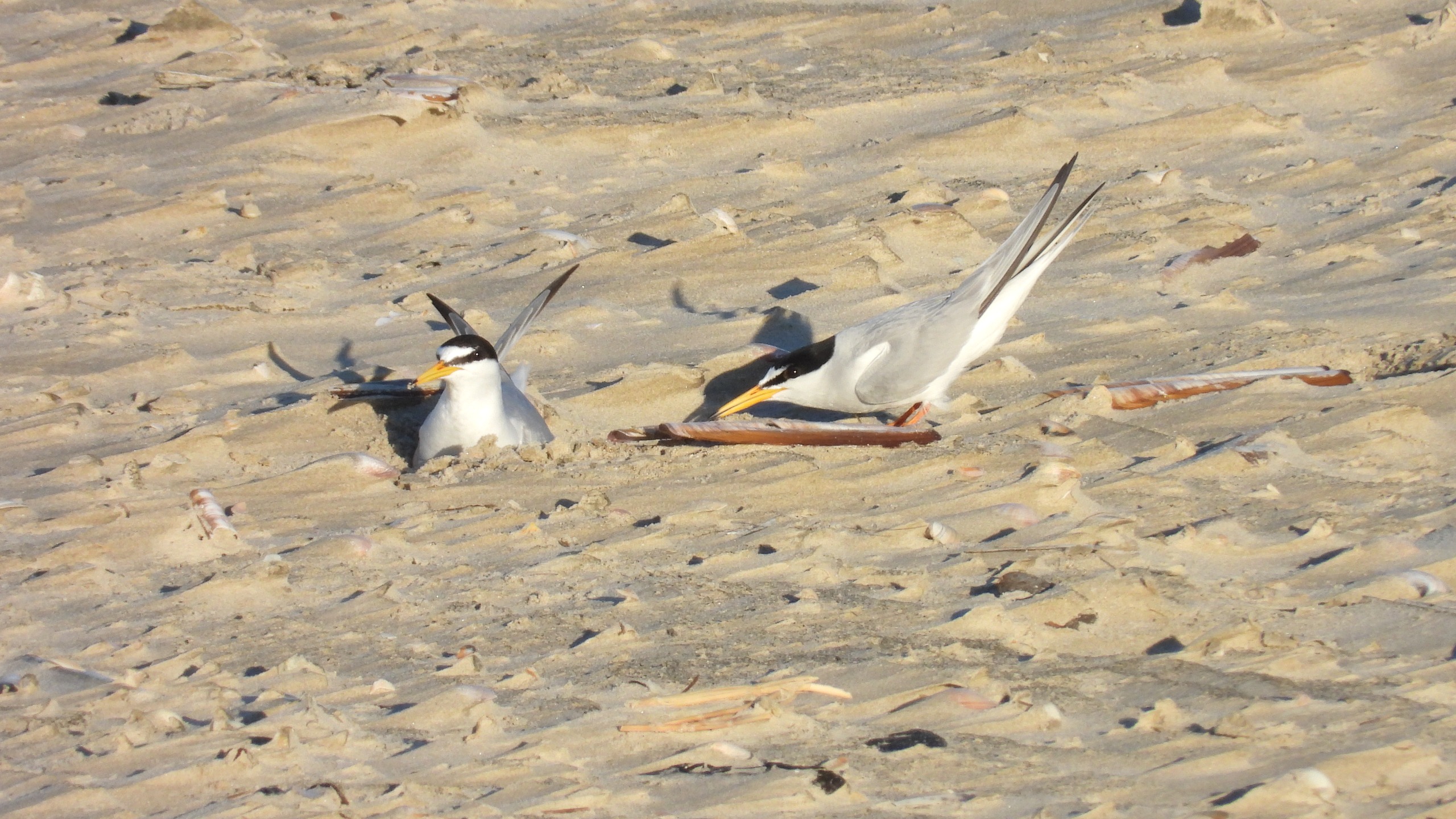
On the left tern Y5J can be seen makin a nest, picture by Joseph Stephan.
After the observation, Joseph and I collected and cleaned up the trash lying in the area around the fence to keep the habitat for the terns (and the other birds, of course) as natural and clean as possible.

Jorn dumping the trash we collected after the observation, picture by Joseph Stephan.
Moths of the day
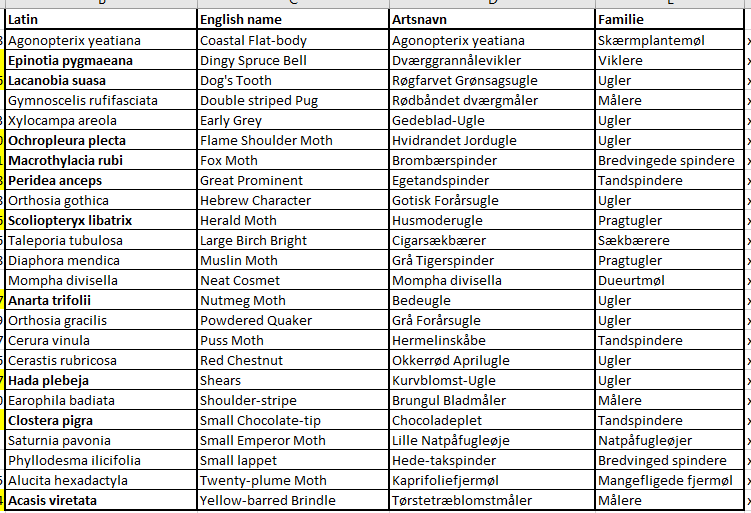
Today we had a very good moth night and caught 24 different species. Ten were new for the location this year: see the bold marked names in the table. I choose the picture of the Shears (Kurvblomst-ugle) and the Small Emperor Moth (Lille Natpåfugleøje) to show you in the blog.
Coming back to the dispersal of Bagworms (Sækbærer). I found two ways of dispersal. One is hanging on a silk wire and be moved by the wind. The other way is that the females are eaten by birds and the eggs are not digested and distributed by fecal deposits.
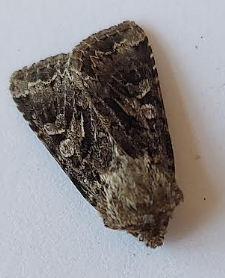
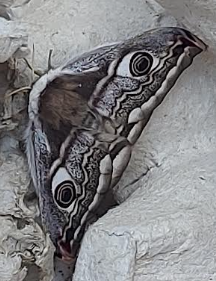
Shears (Kurvblomst-ugle) and Small Emperor Moth (Lille Natpåfugleøje)
At the station: Robert Luttik, Henrik Bøhmer, Bent Jakobsen, Morten Jenrich Hansen, Hanelie Sidhu, Joseph Stephan, Clara Delahaye, Jorn de Jong and David Manstrup.