
Her på Blåvand's blog bringes korte nyheder i dagbogsformat om livet og hændelser på fuglestationen.
-
FORSIDE

- Blog
The mosekone is brygging
lørdag 24. oktober 2026
Ringing: Today was one of those ringing days that take forever. Due to the rain we delayed opening an hour, and after that did more frequent rounds, so the birds wouldn't get drenched in the nets - but in reality, what birds? Late in the morning the drizzle finally dissapeared, but we only ended up with 8 birds in total, even though we persisted through a full standardized ringing.
The next few days look like no ringing at all, so not the best condtitions for my last week in Blåvand, but at least obs looks promising the next two days!
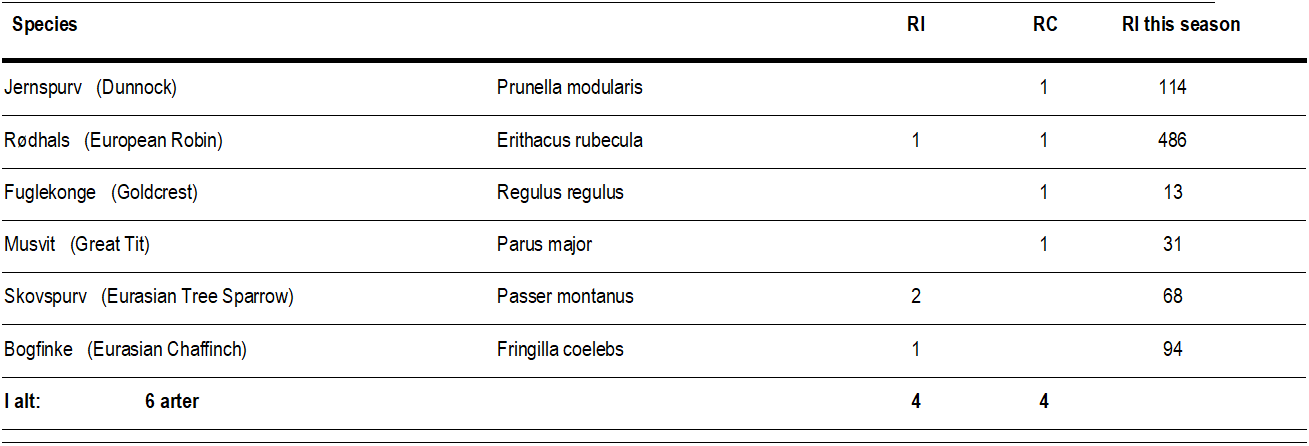
Today's numbers:
Observation:
Anton was feeling under the weather today, so I (Johan) covered obs. This was a tactical decision as there were no birds at all. We were troubled with fog making no birds visible, and water to make us all wet. The highlight of the was 2 resting and 1 migrating Long-tailed Duck (Clangula hyemalis). These ducks look quite exotic and are quite rare lower down in Europe, so we made an effort to appreciate them the most we could.
At the Station: Mathilde Sif Eiby, Anton Ræbild Jensen, Johan Them Steffensen, Storm Hauris Borum, Helena
NUTCRACKERS FOR EVERYONE
fredag 23. oktober 2026
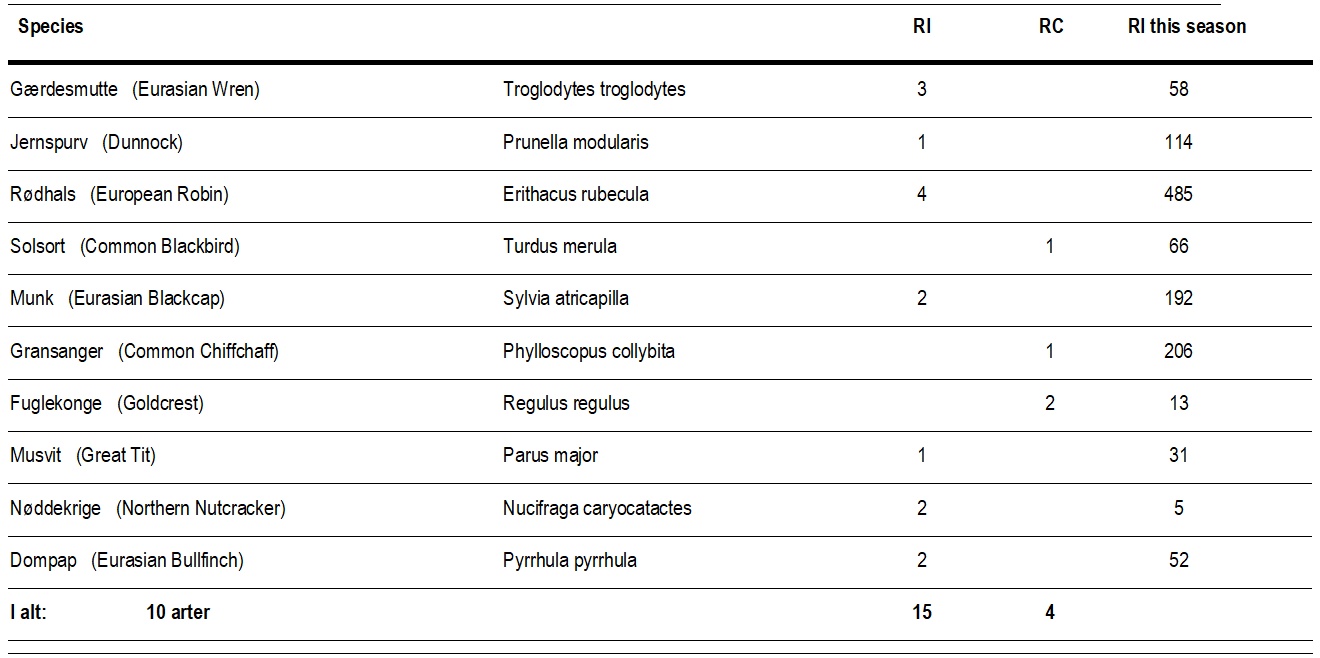
Ringing: Today started out as another chill day with lower volume - 19 birds of 10 species. And what a beautiful morning here at the station!
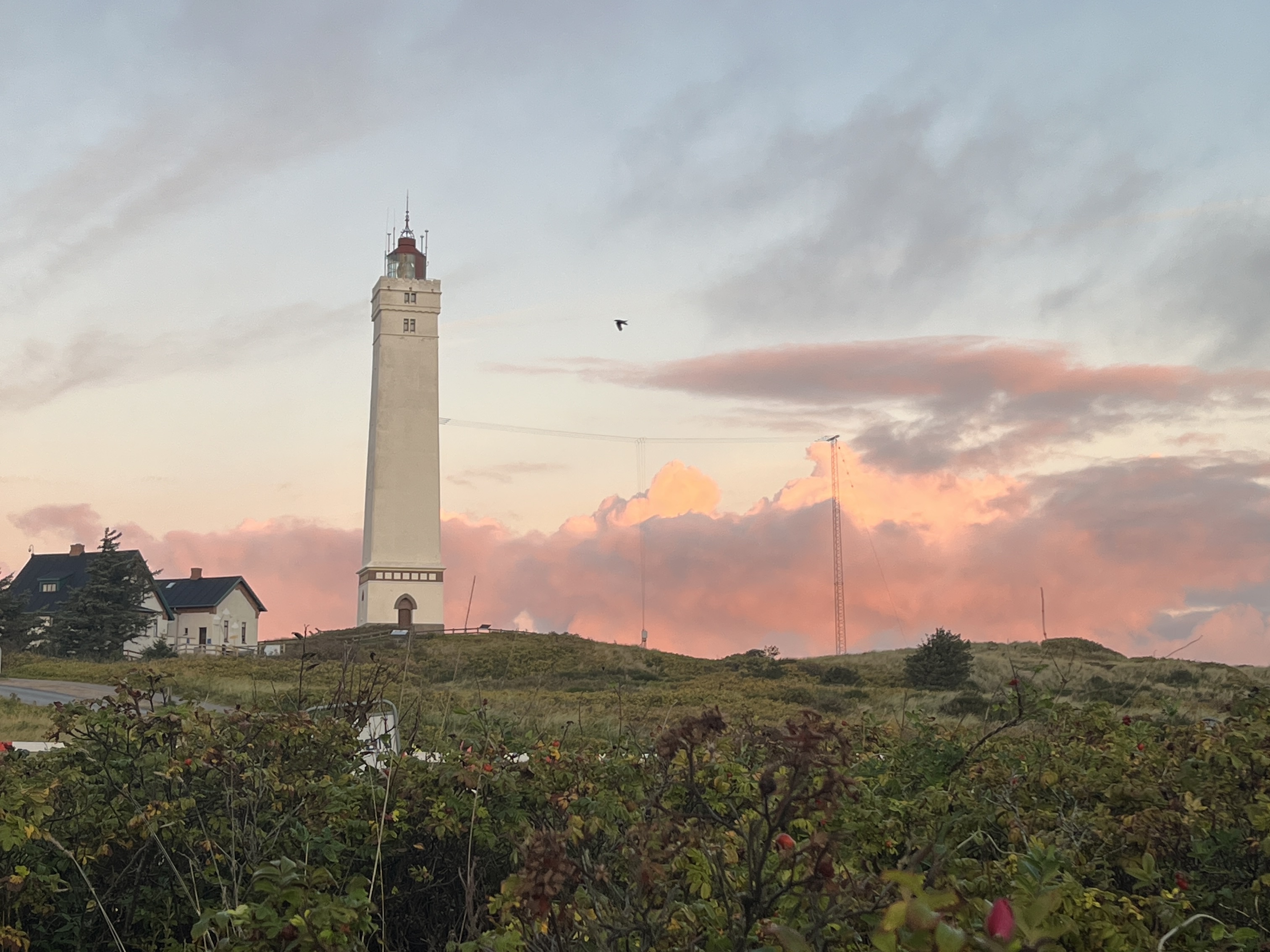 Our view when doing rounds at the station. Picture by Mathilde Sif Eiby.
Our first cool encounter of the day were two Bullfinches (Dompap), a male and a female. Bullfinches normally don't like being held for too long, so after doing data we just took a single picture and let them go on their way.
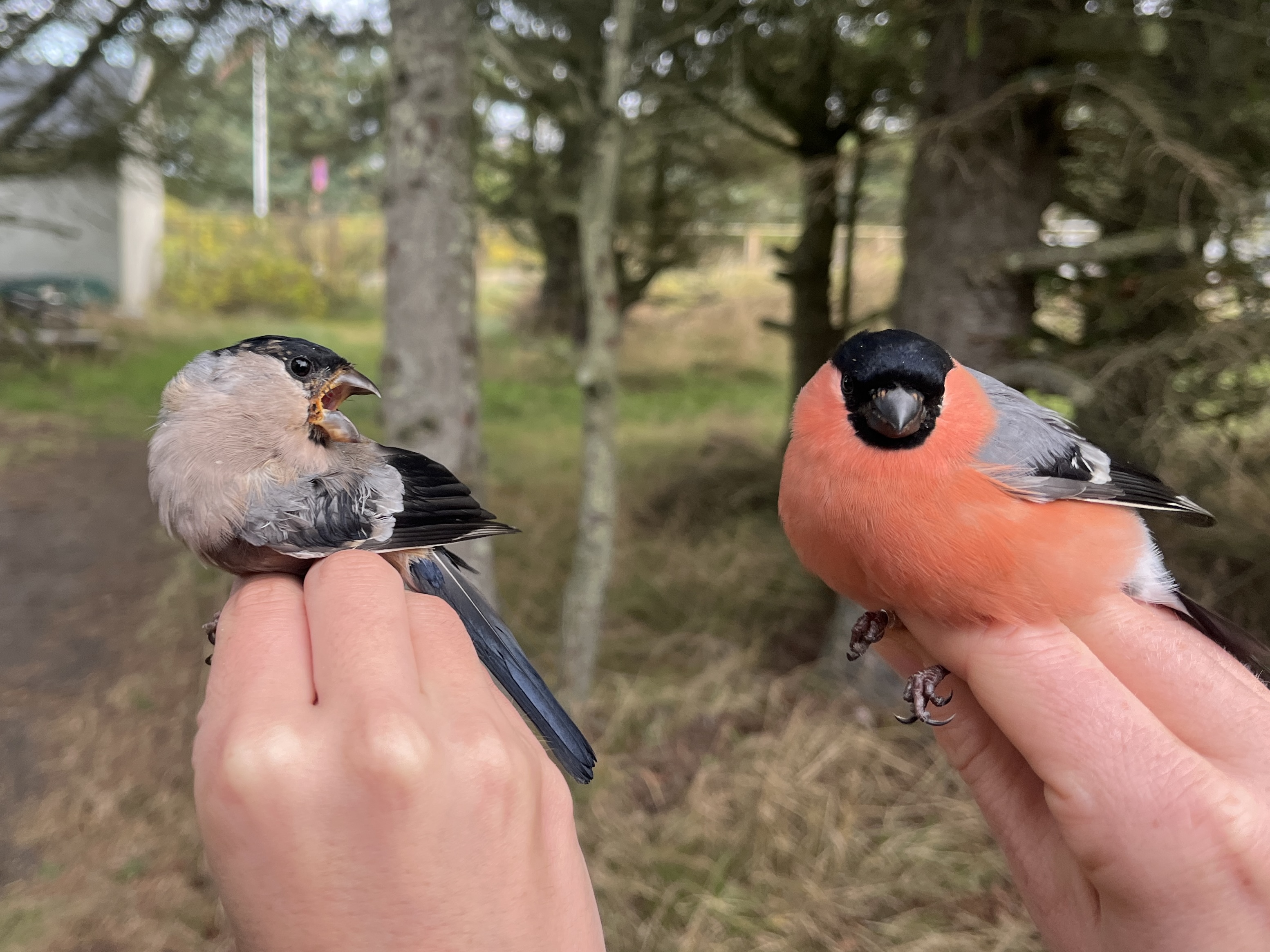 Bullfinches - to the left a young female born this year, and to the right a probable adult male from a previous year. Picture by Mathilde Sif Eiby.
The rest of the standardized ringing went by, but just when we were about to go on our closing round, Storm sent a promising message in the group chat: "NØDDEKRIGE". (Nutcracker). Shortly after Johan came down to the station with a big smile and handed me a bag. And if you thought our fourth Nutcracker in 8 days (and fourth one ever ringed at the station) wasn't enough; while I was ringing it in the lab, Henrik came in with ANOTHER ONE. They'd seen the second one fly over, and after a few seconds of Antons famous mixtape, it had too gone straight into the net!
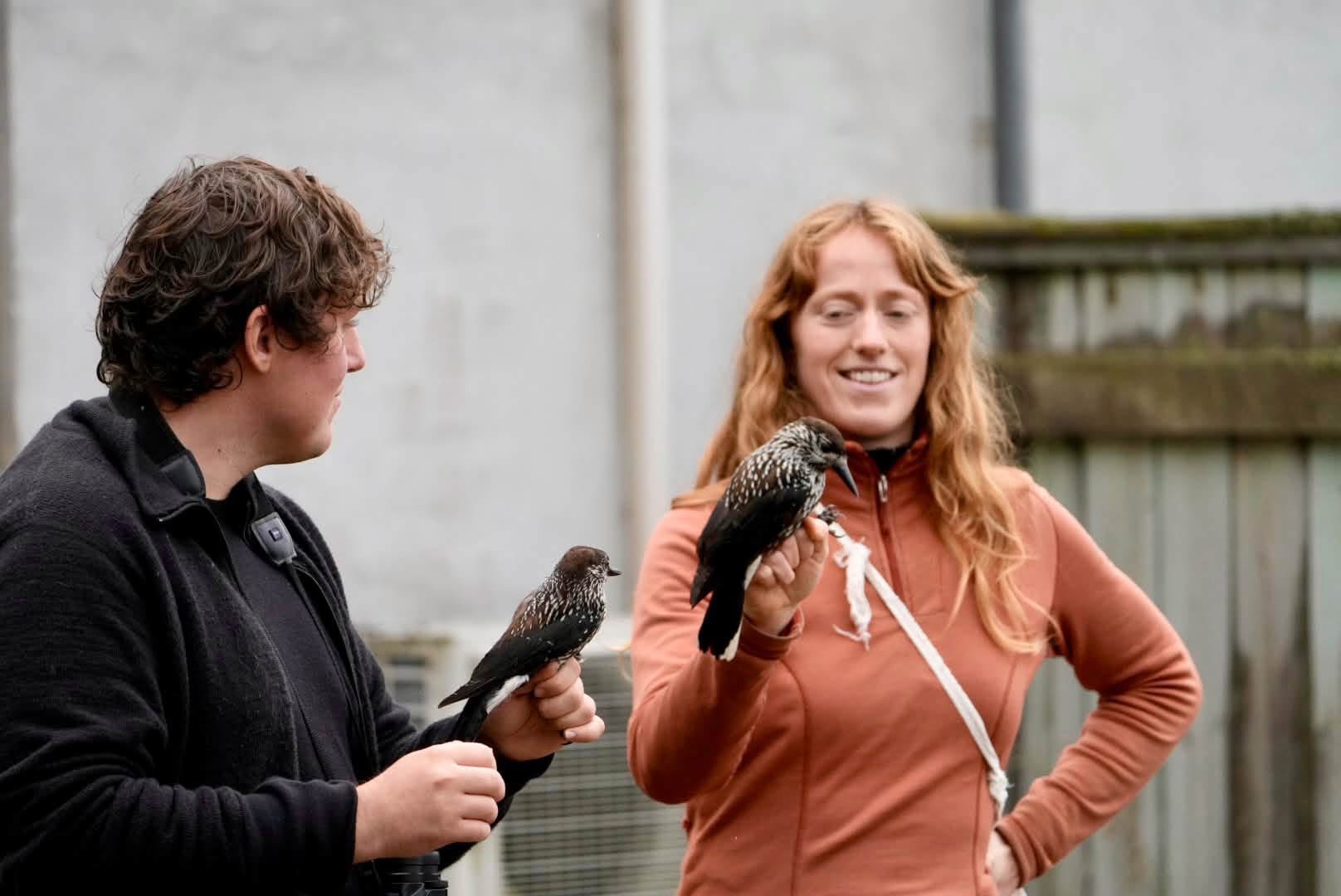 Anton and I displaying today's Nutcrackers. Picture by Henrik Böhmer.
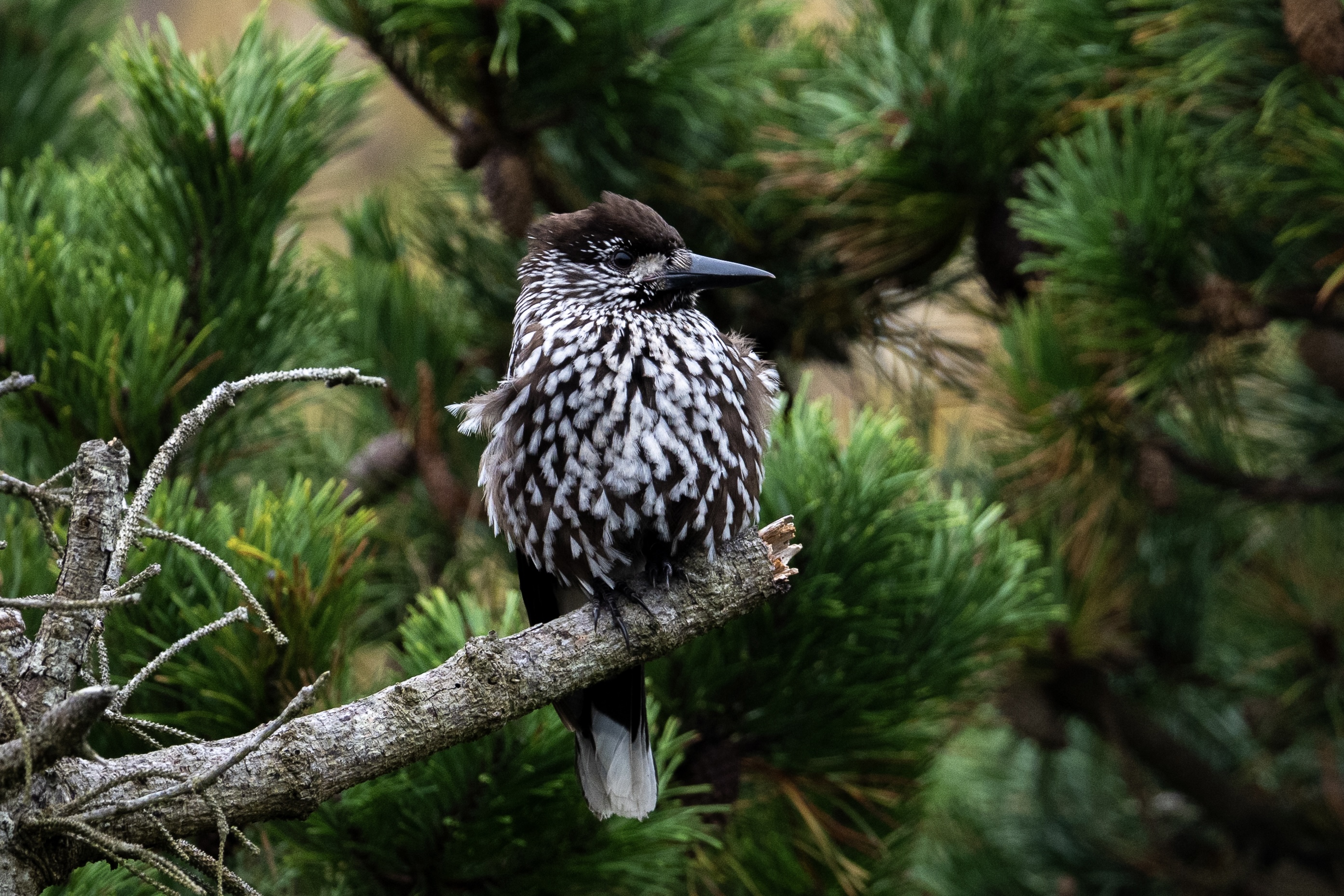 One of the Nutcrackers stayed around for a little while after we released them. Picture by Anton Ræbild Jensen.
With five Nutcrackers now having visited our nets, we're starting to get a better understanding of the ageing. The two birds today were both young birds born this year, with moult limits in the feather group called medium coverts, between the few retained old baby feathers that are browner, shorter and with wide white tips, and the rest new black feathers with triangular white tips. They also both had retained juvenile greater coverts and primary coverts - both feather groups with white tips on all feathers, of which adult birds should have no or only few white tips, according to our favourite french book. If you look at the pictures from the 16th, you can see the adult bird we had for comparison!
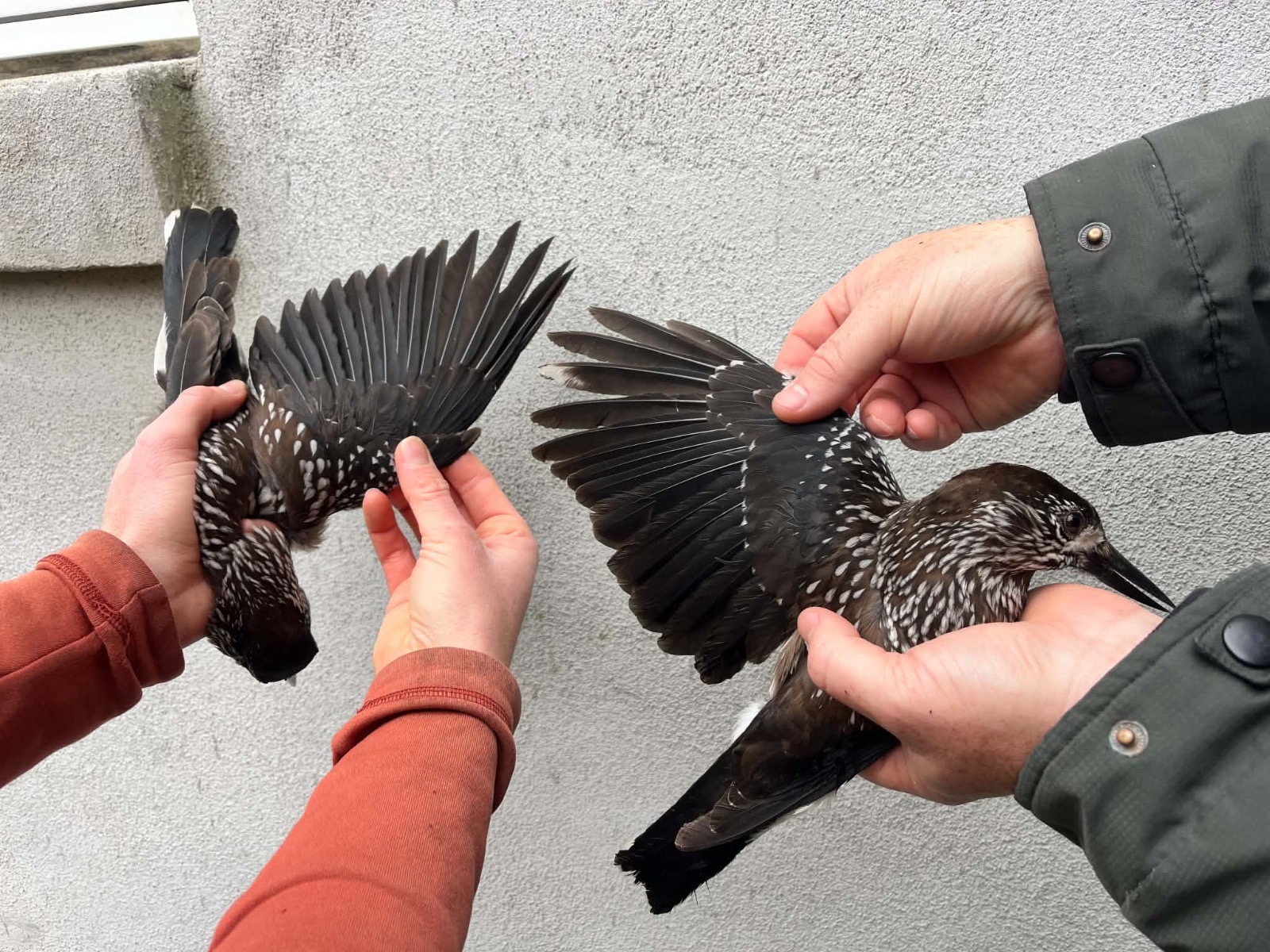 Two young nutcrackers from today. Picture by Henrik Lindgaard.
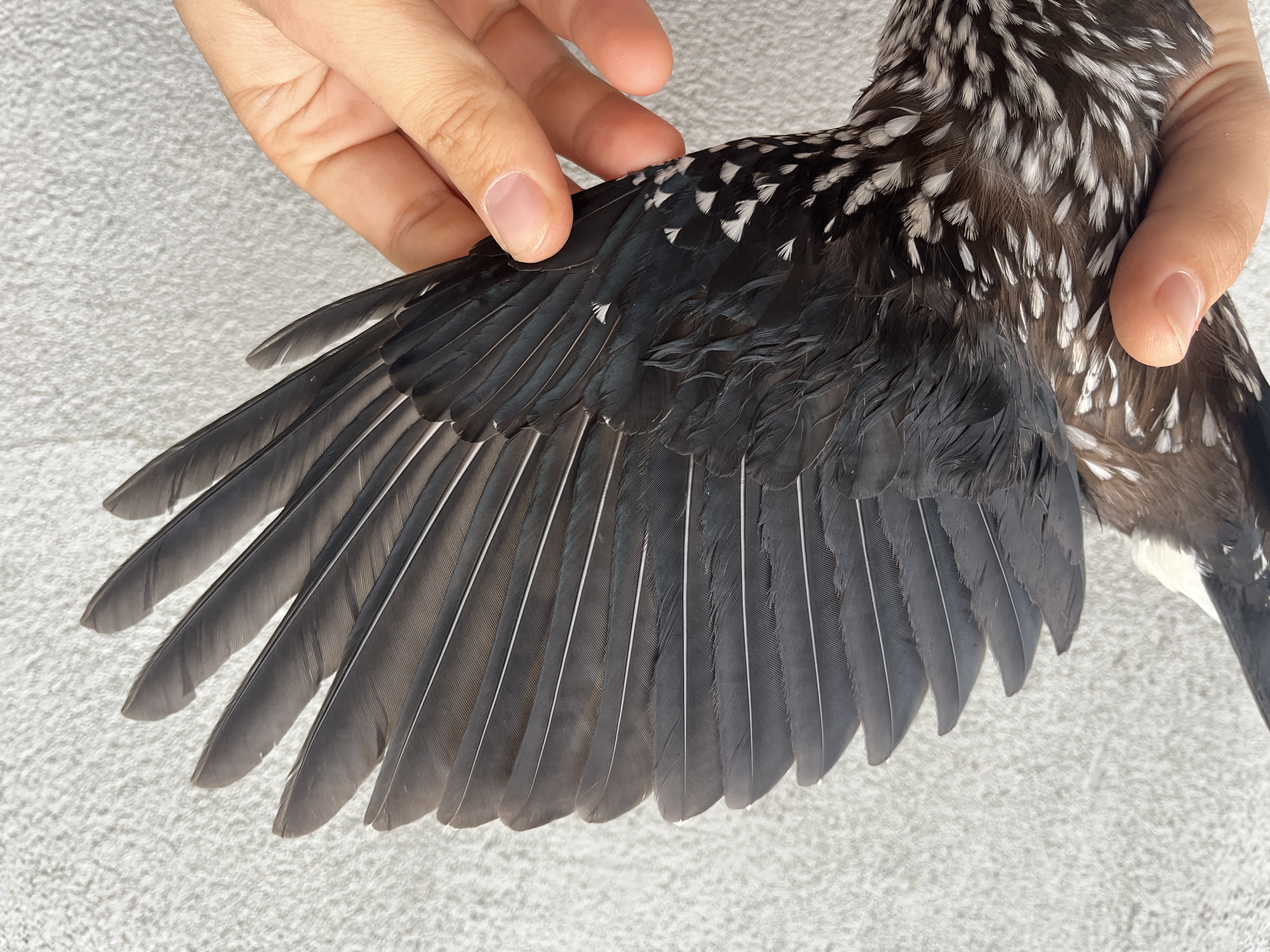 The adult Nutcracker from the 16th of october. Aged by the lack of white tips on greater and primary coverts, as well as pure adult feathers in the medium coverts with solely triangular white tips. Picture by Mathilde Sif Eiby.
Today's numbers:
Observation: Oh wow, another banger of an obs!
While the numbers were nothing to write home about (with only 253 Common Scoters (Sortand), 28 Red-throated Loons (Rødstrubet Lom), 30 Greylag Geese (Grågås), and 54 Little Gulls (Dværgmåge)), the quality certainly was.
The first good bird of the day was already at 08.10 in the morning. I was alone at the Huk when I heard a weird Tree Pipit-like (Skovpiber) call and saw a small pipit fly by me. I noted the time, but didn’t think more about the bird as I got distracted. Luckily, I was recording, and when I opened the recording in Audacity, I was intrigued… the call certainly looked like that of an Olive-backed Pipit (Tajgapiber). After discussing it with Henrik, he agreed, and I gotta say, I was ecstatic!
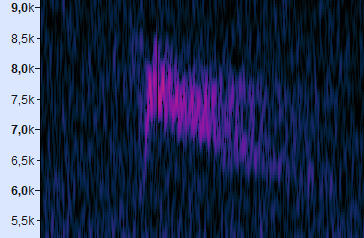
Here is the spectrogram of the pipit call. The length of the modulations, as well as the number of modulations, support Olive-backed Pipit. Furthermore, both the mean frequency and the highest frequency are high for Tree Pipit.
Now, I have had Olive-backed Pipits on the Huk before (3 this season already), but I have never actually managed to find one on my own before, so this is kind of a big milestone for me. This is also the first bird I have found on my own that would have to be approved by the Danish Rarity Committee. Hopefully they agree with me…
But this is not where the hit-filled obs ends, as just 25 minutes after the pipit, I managed to spot a loon that looked absolutely gigantic. As it got close, I could easily see it was a Common Loon (Islom) that, despite its name, is the first surefire find of this species at obs this season. Usually, they would already have arrived at least a couple of weeks ago, but as with most species this year, they have arrived quite late.
The last “hit” we managed to squeeze out at obs today was a pretty sizeable flock of Red Crossbills (Lille Korsnæb) that flew right overhead. A total of about 22 birds were seen, which is the highest amount this season.
Unfortunately, my luck ran out there, as heavy rain/fog rolled in at sea, completely killing any migration and any remaining visibility today. Still, I have no complaints: two good birds and 22 Red Crossbills in nothing to scoff at.
At the Station: Mathilde Sif Eiby, Anton Ræbild Jensen, Johan Them Steffensen, Storm Hauris Borum, Helena
New Winds, New Birds!
torsdag 22. oktober 2026
Ringing: Closed due to heavy winds...
Observation: New winds are always great, and today was proof of that. Usually, winds from the east and southeast are very good in Blåvand, but yesterday and the day before yesterday were just kind of mediocre. So I (Anton) was certainly happy when I looked at DMI and saw that the wind would quickly switch to a decent (12 m/s) wind from the southwest.
The wind brought both good numbers and good species. As for the numbers, the most notable ones were the 1520 Common Scoters (Sortand), the 15 Velvet Scoters (Fløjlsand), the 55 Little Gulls (Dværgmåge), and the 170 Northern Gannets (Sule) flying by.
And as for the species, the most notable ones were 2 Kittiwakes (Ride), 1 Black Guillemot (Tejst), 1 Arctic Skua (Almindelig Kjove), 1 Red Phalarope (Thorshane), and 1 Puffin (Lunde). I had never seen a Puffin or a Red Phalarope at sea before (only ever resting), so it was nice to get an impression of how they look in flight far out. The bird of the day, according to Henrik, was however neither the Puffin nor the Phalarope - it was apparently the Black Guillemot. Black Guillemots are quite rare at Blåvands Huk (have I learned today), which I could definitely feel on the way Henrik called it out for us at obs. It had been quiet for five minutes when he suddenly yelled: “Black Guillemot, there's a Black Guillemot! Anton, do you see it?!”. I have never seen him so excited for a bird, perhaps with the exception of the Red-throated Pipit (Rødstrubet Piber) we had earlier in the season. I must admit, I couldn’t match Henriks excitement for the Black Guillemot… where I come from (Fyn), there are several breeding locations close by, and it is a relatively common bird locally. To me, I think the highlights of today must be either the Little Gulls or the decent number of first year Northern Gannets - both things I haven’t seen a lot this year.
The wind tomorrow goes back to the southeast… I am not really sure what to expect, but maybe something good comes by obs. If not, I might have go looking in the bushes for something rare and skulky. Either way, I am hopeful that we can match today's results tomorrow!
At the Station: Mathilde Sif Eiby, Anton Ræbild Jensen, Johan Them Steffensen, Storm Hauris Borum, Helena
Just a few locals
onsdag 21. oktober 2026
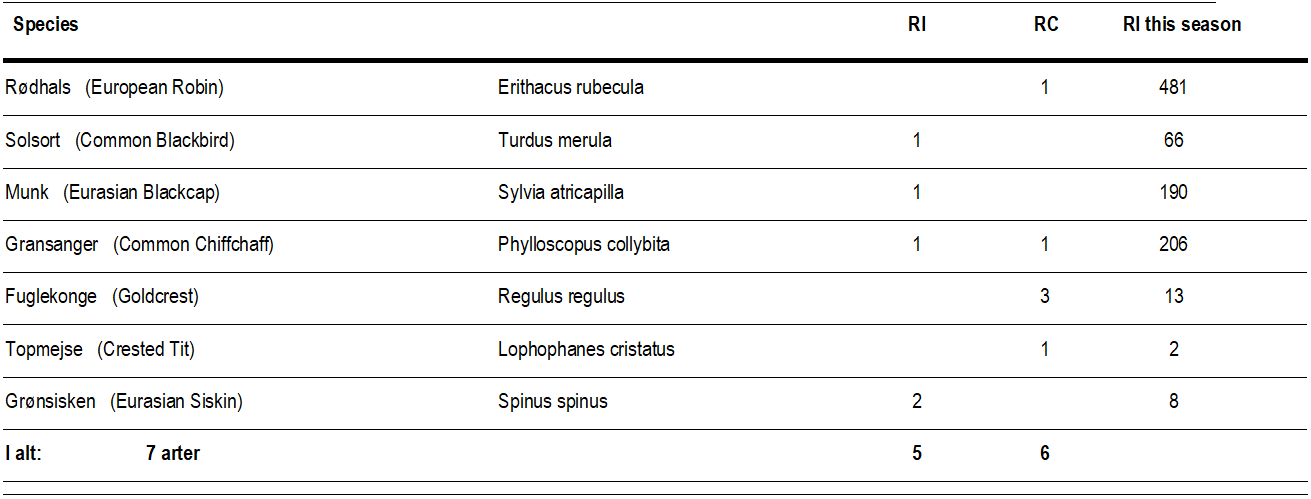
Ringing: Pretty high wind today resulted in not that many birds in the nets. We ended up with 11 birds in total, which exceptionally consisted of more recaptures than new birds.
The local Goldcrests (Fuglekonge) have been revisiting the nets a few times now, as well as our local Crested Tit (Topmejse). Both species we would actually really like to get more newly ringed of, especially the Goldcrests are caught in dramatically lower numbers than usual.
Today's numbers:
Observation: Today was quite similar (too similar, if you ask me) to yesterday. Luckily, unlike yesterday, I (Anton) was joined by David, which helped greatly with my enjoyment of the obs. The wind was still from the east, and very few birds were in the air. The most notable ones were the geese and ducks - of these, the most interesting ones were the 108 Wigeons (Pibeand), 14 Greater White-fronted Geese (Blisgås), the 12 Pintails (Spidsand), and the 4 Tufted Ducks (Troldand). A single Mallard also joined us at obs, which is a species I have not seen a lot of the last month or so out here.
Other than the ducks, most numbers were low. Even the usual suspects were few, with only 279 Common Scoters (Sortand), 19 Red-throated Loons (Rødstrubet lom), and no migrating Meadow Pipits (Engpiber) or Chaffinches/Bramblings (Bogfinke/Kvækerfinke).
Hopefully tomorrow will be more exciting…
At the Station: Mathilde Sif Eiby, Anton Ræbild Jensen, Johan Them Steffensen, Storm Hauris Borum, Helena
Goodbye Strummer
tirsdag 20. oktober 2026
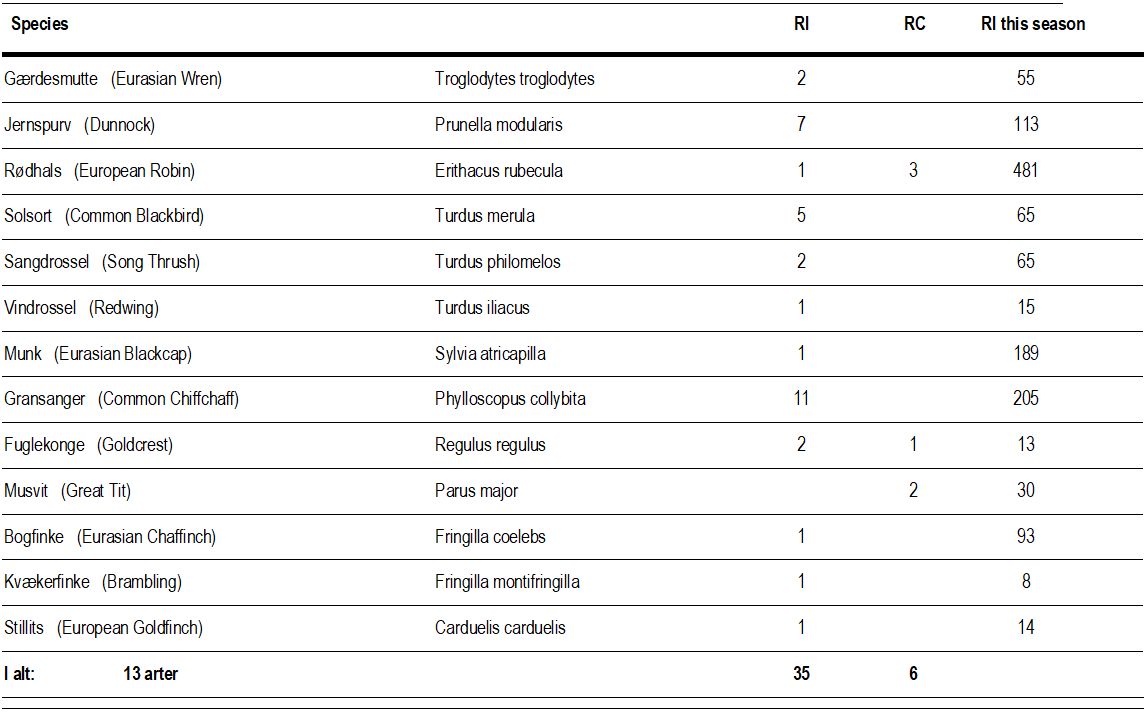
Ringing: Today we had 41 birds of 13 species. The Chiffchaffs (Gransanger) were suddenly back to being our most numerous bird, and we even had one of the biggest I've ever seen - 67mm wing and 9,1g weight! It was an adult as well (not born this year), with the broadest tail and best feather structure I've ever seen on a Chiffchaff too.
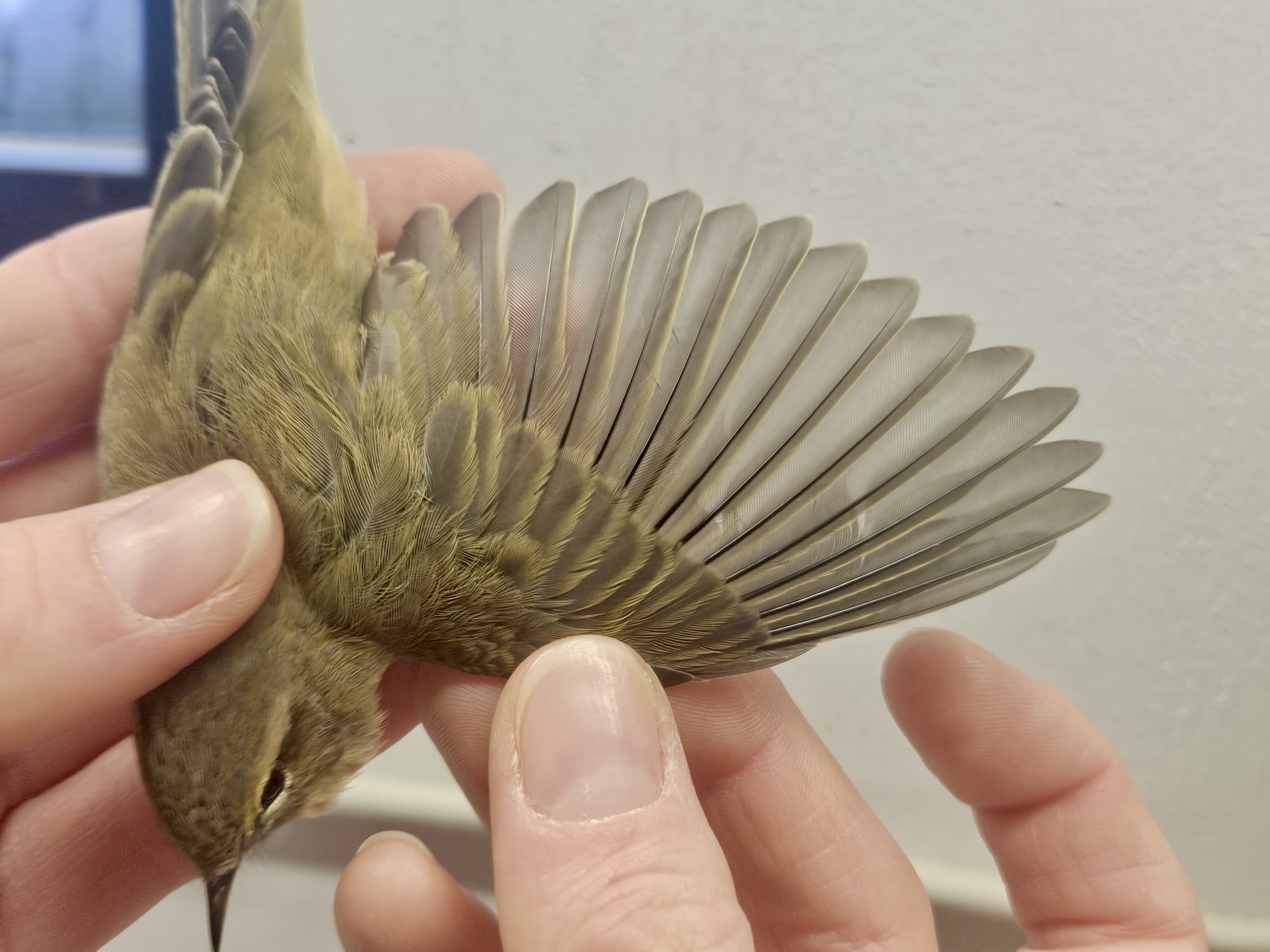
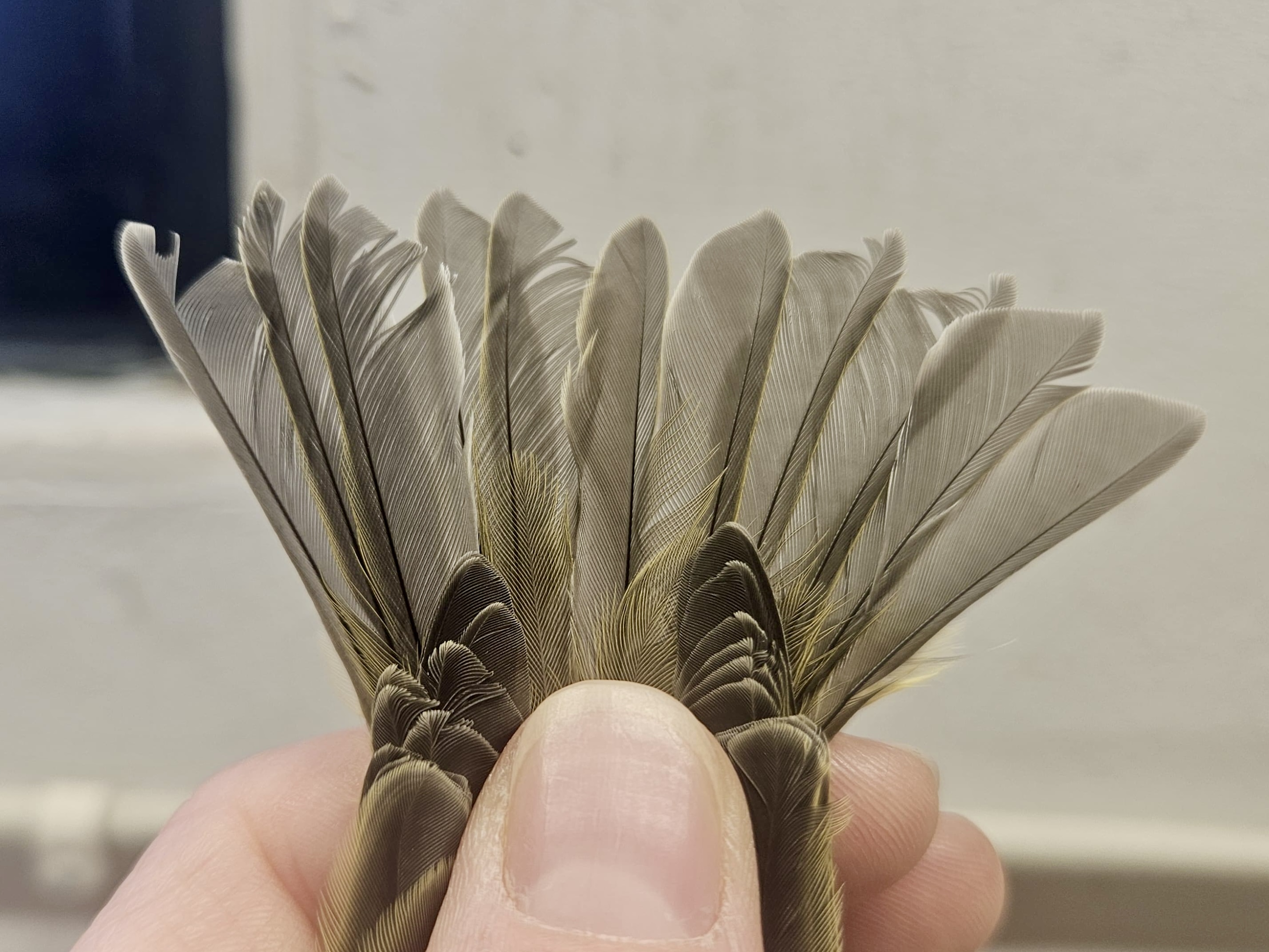 To the unexperienced eye, this might look like a regular old Chiffchaff, but this was a NICE bird. Pictures by Storm Hauris Borum.
We also had a good amount of thrushes again, five of which were Blackbirds (Solsort), and they were really showing off their wide variation today.
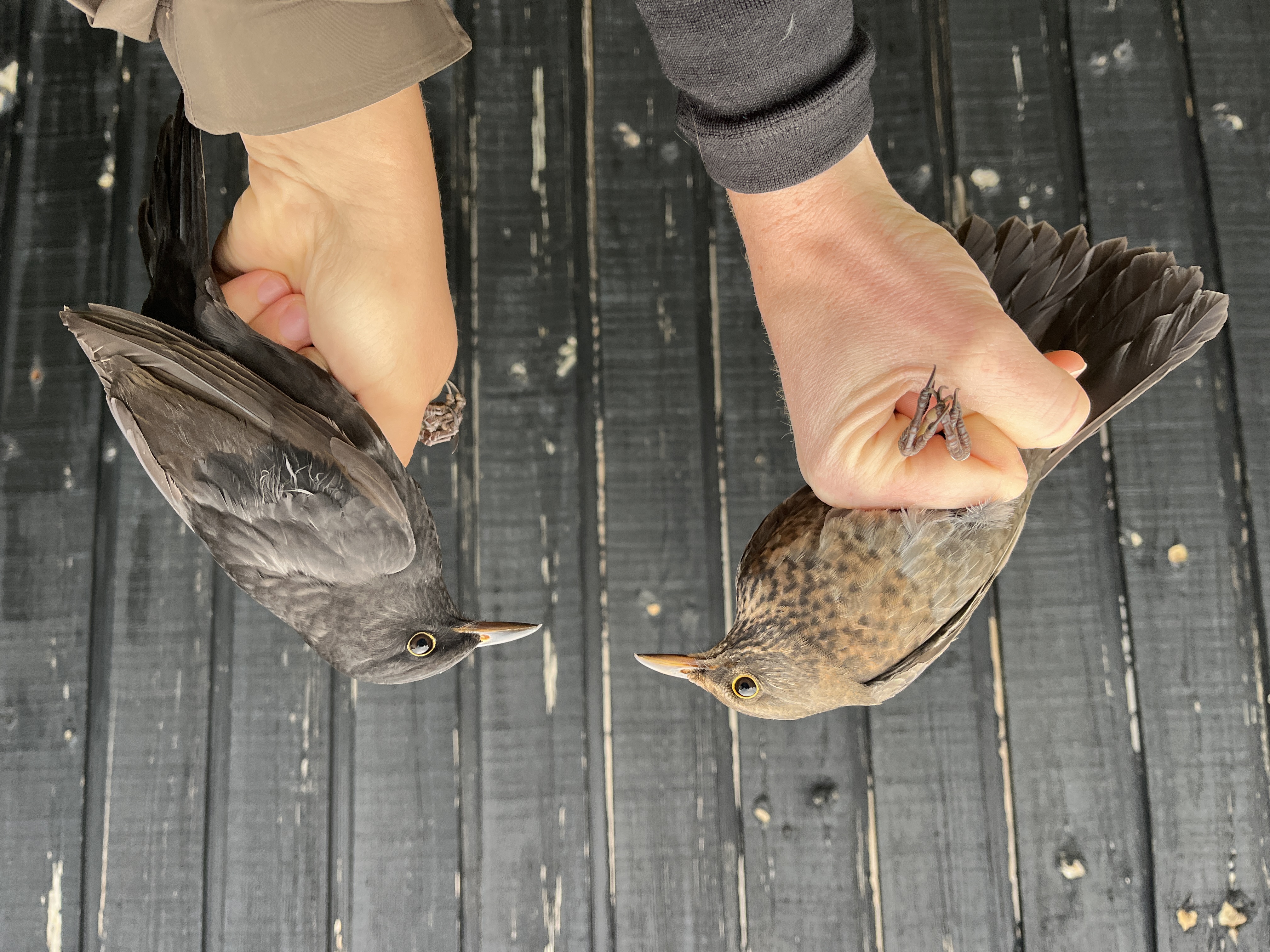
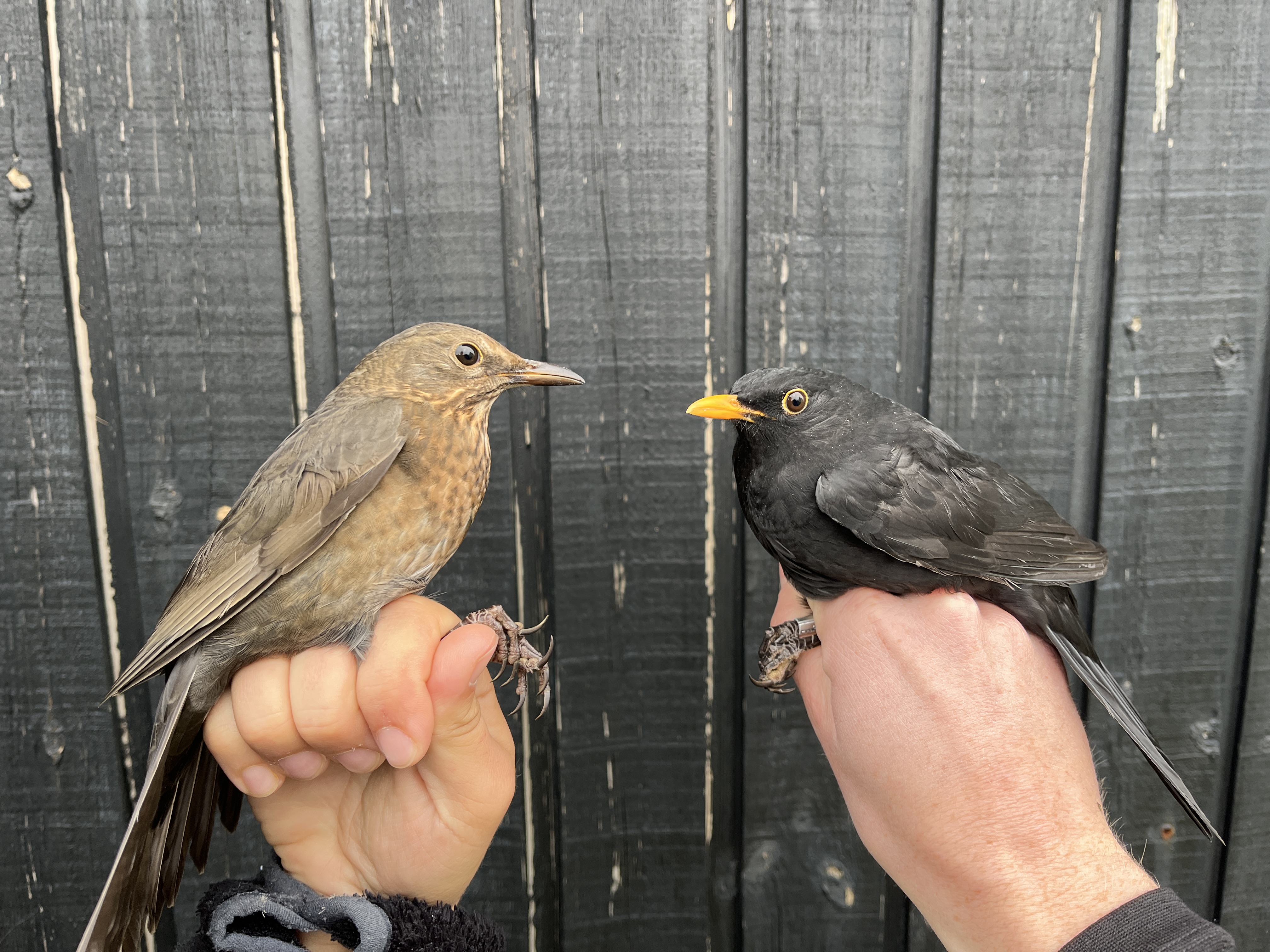 On the left both young females, the bottom one the palest Storm and I had ever seen. On the right both males, the top one born this year, aged on the brown feathers (old baby feathers) contrasting to the black ones (new teenage feathers) and the dark bill, while the bottom one is a clear adult bird (born a previous year), with a pure black plumage and yellow bill. Pictures by Mathilde Sif Eiby.
Today's numbers:
Observation: Today was an extremely uneventful day at obs, with no notable species to speak of. The only exceptions to this were the female Hen Harrier (Blå Kærhøg) that flew out from the Huk around the very start of obs, as well as the 6 resting Horned Larks (Bjerglærker).
As for the numbers, there is really not much to speak of either, with few (27) Red-throated Loons (Rødstrubet Lom), 367 Common Scoters (Sortand), 190 Starlings (Stær), and 55 Common Eiders (Ederfugl).
Other things: Today was also unfortunately Strummers last day at Blåvand Fuglestation before their visa would expire. They will be sorely missed, both at the nets ringing Nutcrackers (Nøddekrige), but also in the living room watching South Park and Paddington 2 on repeat. All the volunteers at the station look forward to hopefully seeing them again in the near future.
At the Station: Strummer Edwards, Mathilde Sif Eiby, Anton Ræbild Jensen, Johan Them Steffensen, Storm Hauris Borum, Helena
What a tease!
mandag 19. oktober 2026
Ringing: Another beautiful morning at the west coast, with gardens a bit too quiet besides the occasional thrush, but the Jackdaws (Allike) were still filling up the sky.
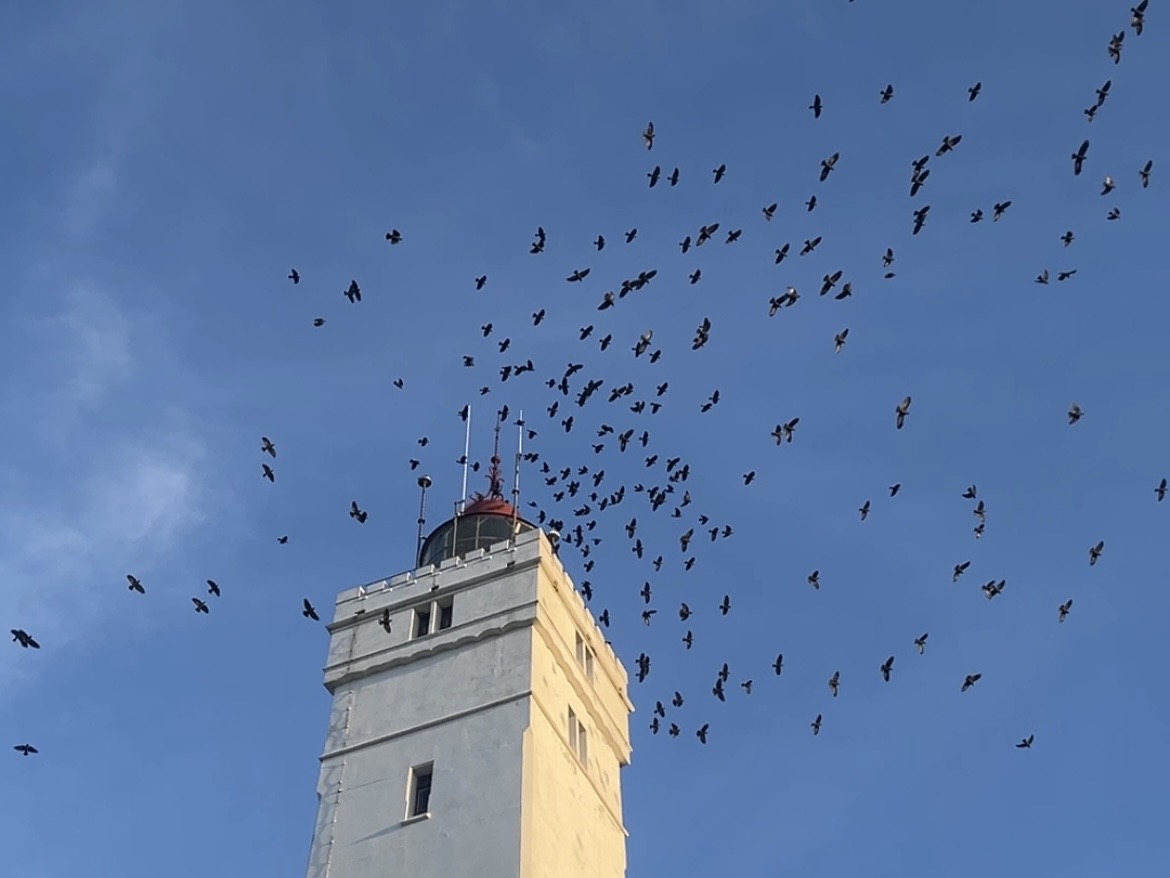 Jackdaws circling the lighthouse. Picture by Mathilde Sif Eiby.
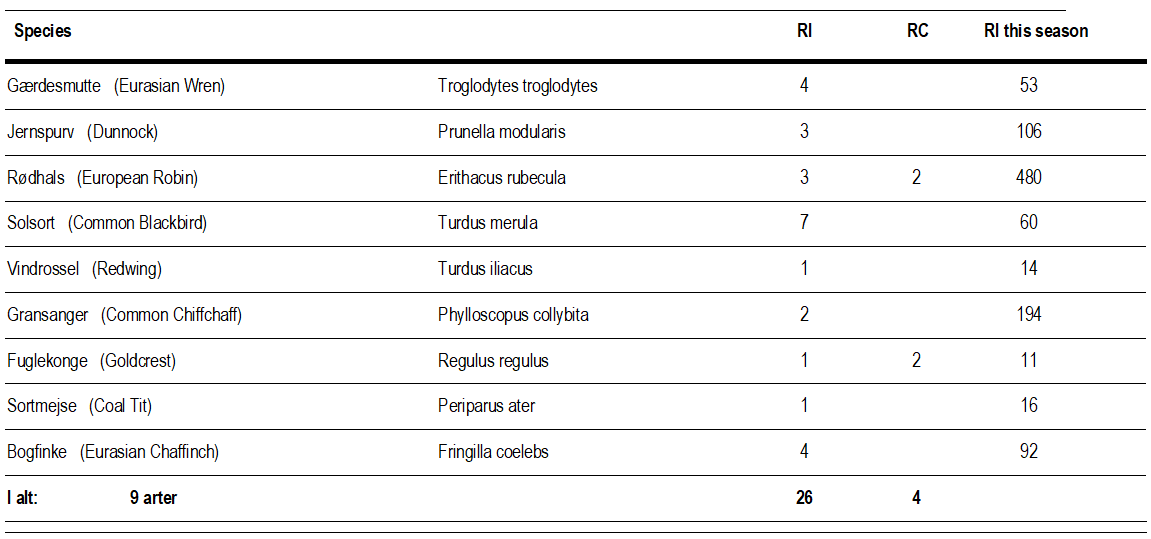
With the low volume day, we could introduce our new guest Helena, who's gonna be here for some weeks, to some ringing too. Our most numerous bird in the nets today was the Blackbird (Solsort), with 7 out of 30 individuals.
Just before closing, Storm and I were checking our non-standard nets, when Storm heard a Nutcracker (Nøddekrige) respond to our mixtape! I found it right after just chilling on a branch SO close to the nets and preening its feathers without a care for us. Despite our best efforts, it eventually flew off without visiting any nets though. It could have been our FOURTH ringed Nutcracker, and my first own ringed... crossing my fingers for the next few days!
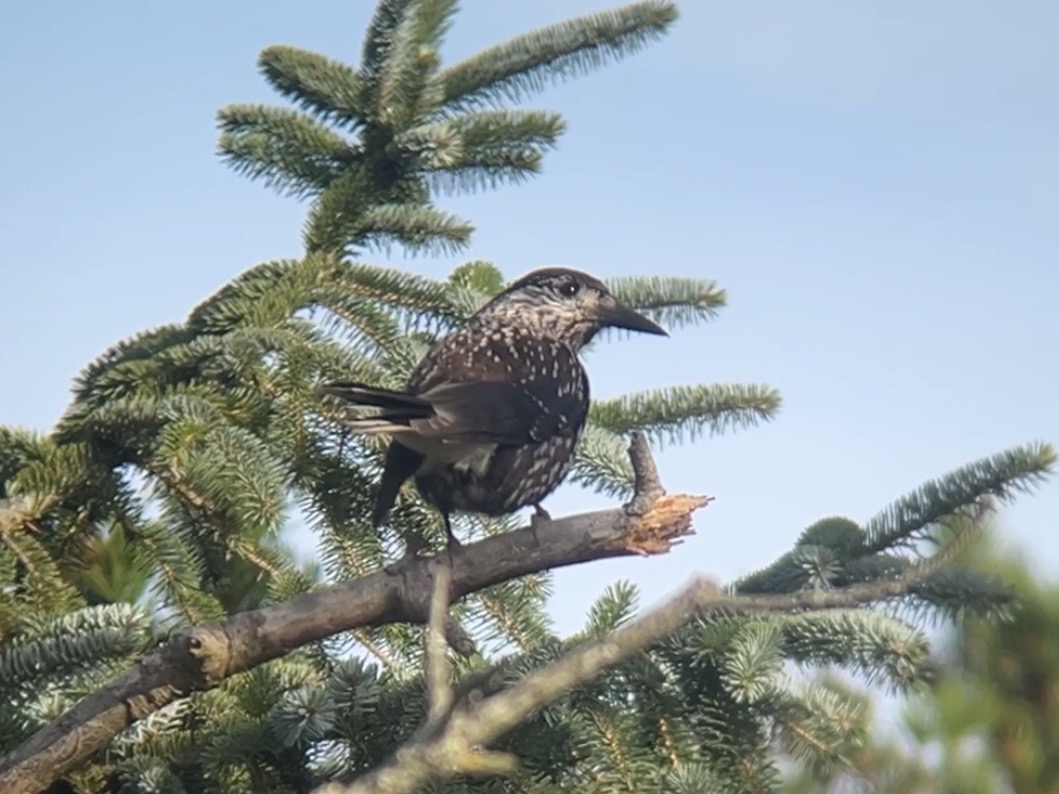 The Nutcracker teasing us today. Picture by Mathilde Sif Eiby.
Today's numbers:
Observation: Today was another beautiful but also cold day, with clear skies and a mild wind from the east. This is apparently also the perfect recipe for corvids, as today was another record-setting obs for a corvid species - this time Rooks (Råge)! With a mind-blowing 518 individuals in the sky, we at least matched the number from yesterday, and also probably beat it. Today also brought plenty of Jackdaws (Alliker), with over 4100 individuals flying by. The Starlings (Stær) were also, like yesterday, plenty - a nice 2060 birds visited us at obs.
What wasn’t like yesterday were the thrushes. With no Fieldfares (Sjagger), 1 Mistle Thrush (Misteldrossel), no noticeable migrating Blackbirds (Solsort), and only 240 Songthrushes/Redwings (Sangdrossel/Vindrossel), I wasn’t impressed. There were, however, a decent number of Chaffinches/Bramblings (Bogfinker/Kvækerfinker) at 880, which was a nice change.
We were also lucky enough to see 2 Hen Harriers (Blå Kærhøg) fly by, as well as 3 (at once) Nutcrackers (Nøddekriger). Overall, a pretty decent day, I’d say.
Other things: Later in the day a Pallas' Leaf Warbler (Fuglekongesanger) was spotted nearby, which we of course had to go see, and for Strummer's last evening, we went to the top of the lighthouse before dinner. From the top we even spotted a Polecat (Ilder) or Marten (Mår) running along one of our closed nets.
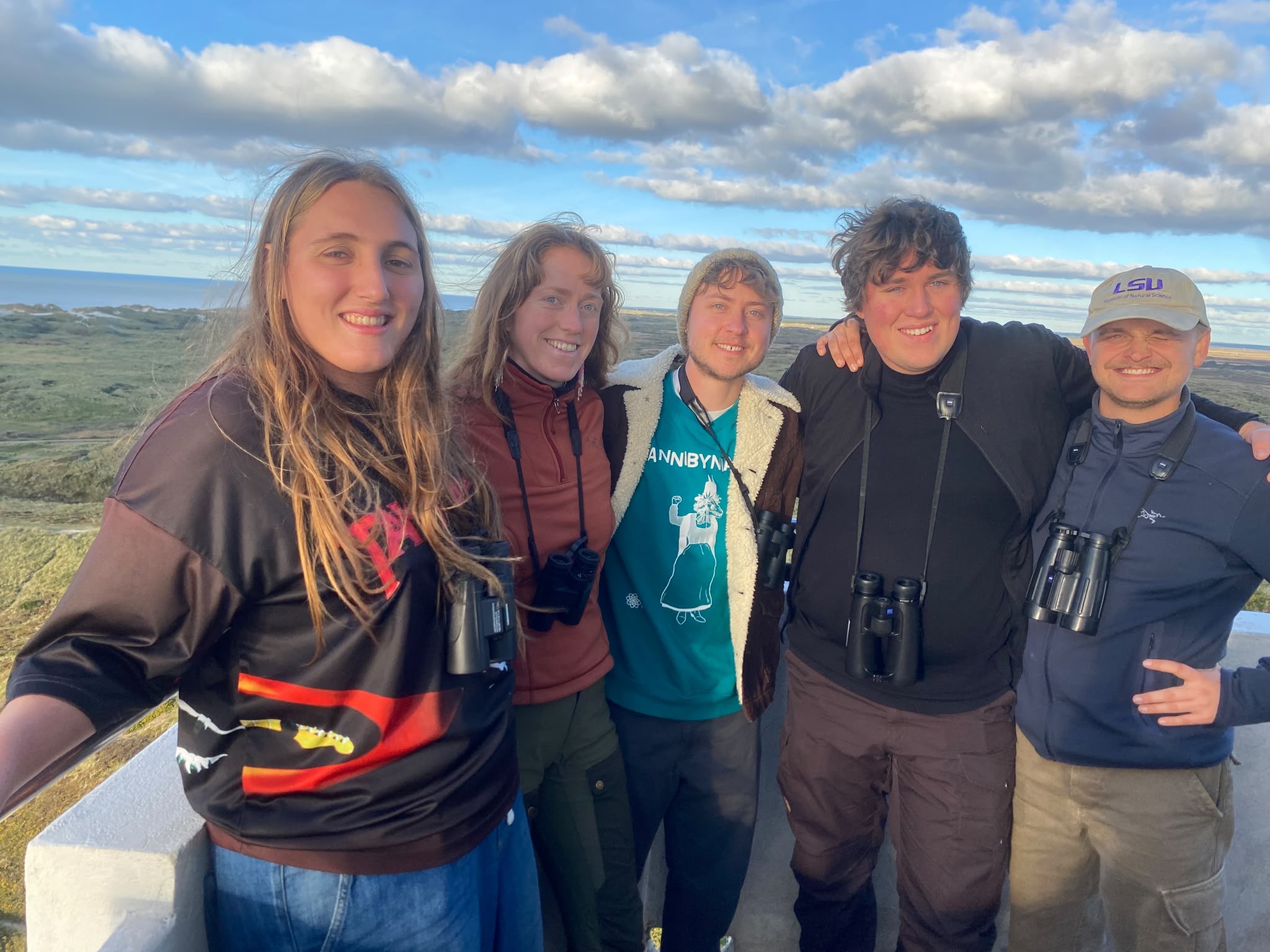 The October gang. Picture by german tourist.
At the station: Strummer Edwards, Mathilde Sif Eiby, Anton Ræbild Jensen, Johan Them Steffensen, Storm Hauris Borum, Helena
Corvid and thrush Mecca
søndag 18. oktober 2026
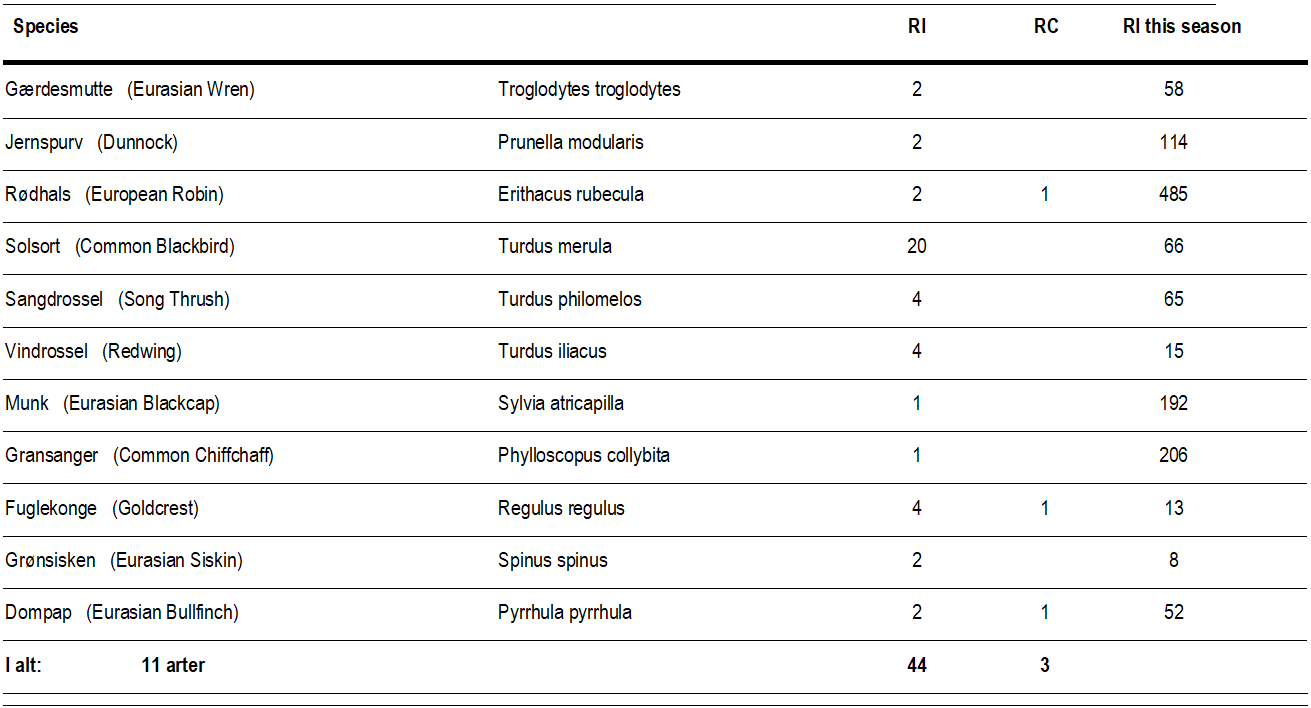
Ringing: Strummer, Johan and Storm were ringing today, but didn't mention anything exciting, besides 20 (TWENTY!) Blackbirds (Solsort) - I'm guessing one of our highest numbers of Blackbirds in a day ever?! That meant 28 thrushes in total out of 47 birds... I'd say that's a pretty good day.
Today's numbers:
Observation: My (Mathilde's) first day back at the station after a week at DOF UNG camp! I went for my potentially last obs of the season (depending on the weather), since I'll be taking Strummer's place as head ringer, when they sadly have to leave on Tuesday.
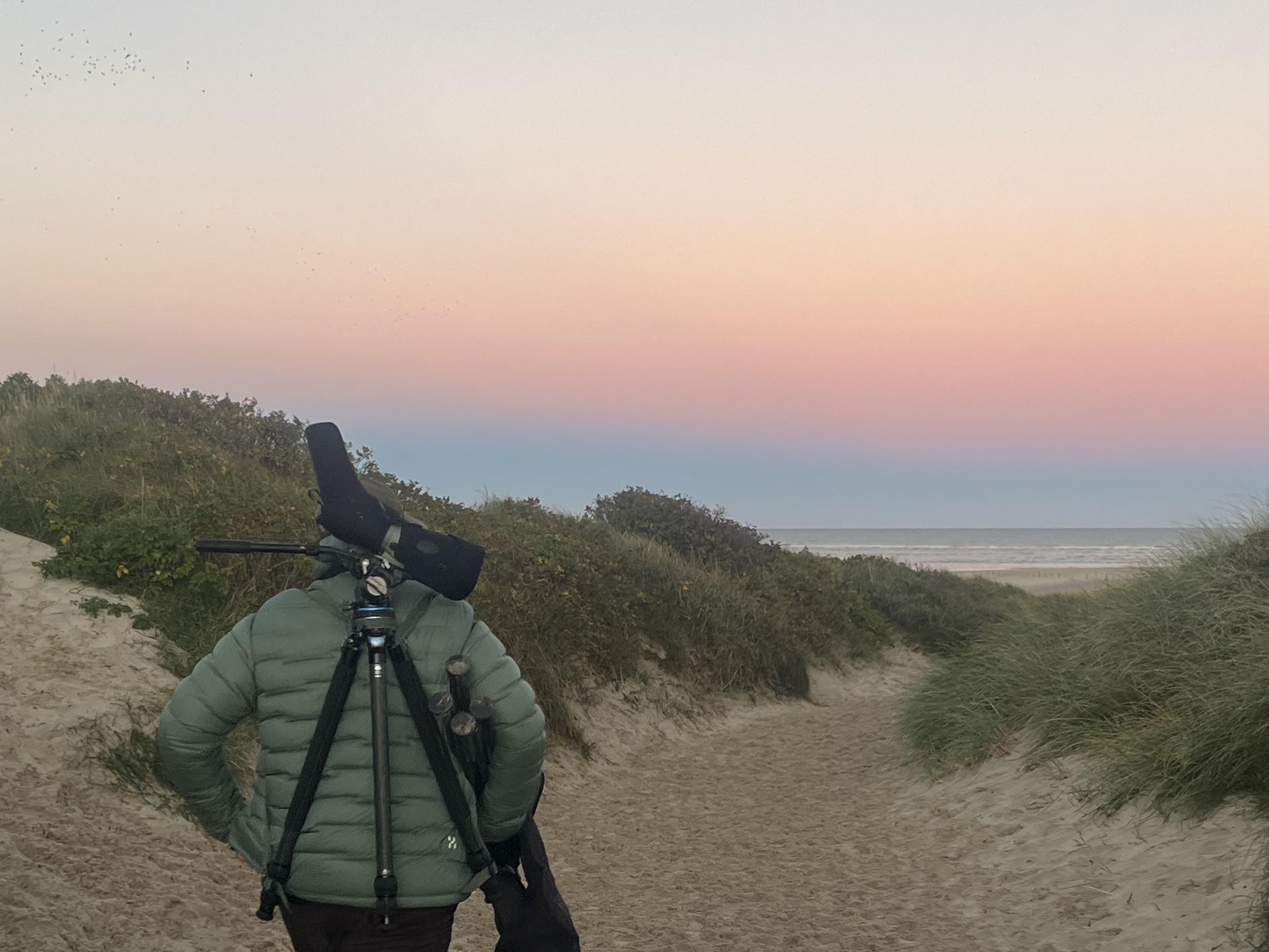 A nice walk to the observation post - corvids already fill the sky. Picture by Mathilde Sif Eiby.
Today we had striking numbers of corvids, and especially giant flocks of Jackdaws (Allike), totalling in 1970 definite individuals and 2710 mixed individuals of corvids, with an estimate of 80% of them being Jackdaws too. With this estimate it results in the highest number of Jackdaws ever counted during the standard at Blåvands Huk, with the previous record being 2881 individuals October 15th 1997. The rest of the corvids were mostly Rooks (Råge), approximately 500 individuals, which means we probably broke the record for Rooks as well, with the previous record being 345 individuals October 3rd 2024.
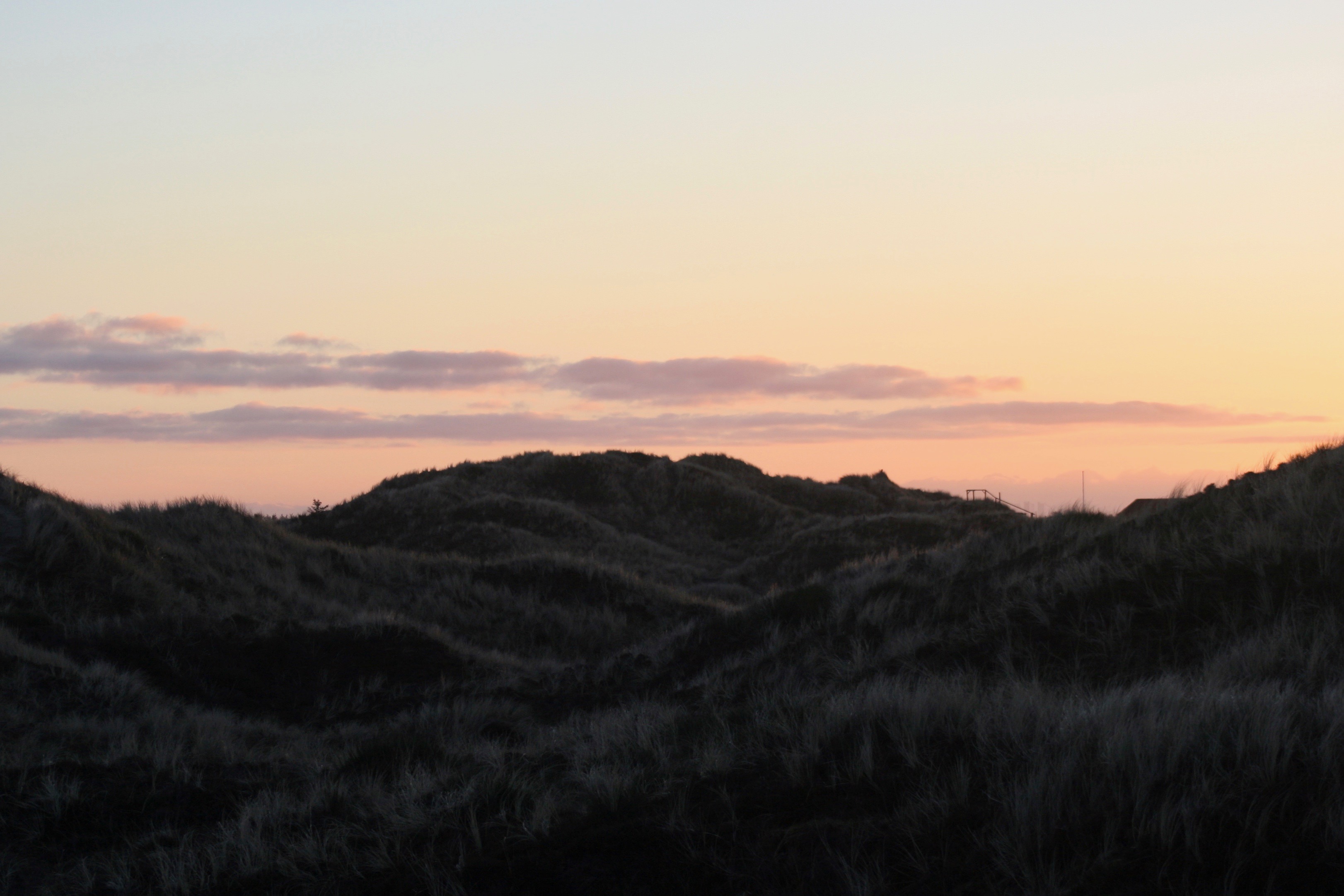 So many Jackdaws flew right above our heads today. Picture by Mathilde Sif Eiby.
We also had a great amount of thrushes, with a mix of 2890 Redwings (Vindrossel) and Songthrushes (Sangdrossel) migrating south, being the second highest number ever counted here, only surpassed by an amazing observation of 4655 individuals October 12th 1977.
Other than that we had a good amount of Blackbirds (Solsort), our first Waxwing (Silkehale) of the season and a super nice Great Egret (Sølvhejre) flying right above our heads.
As the tide kept falling, in the last hour a White-tailed Eagle (Havørn) went to rest close by four adorable Harbor Seals (Spættet Sæl) out on the furthest visible shoal.
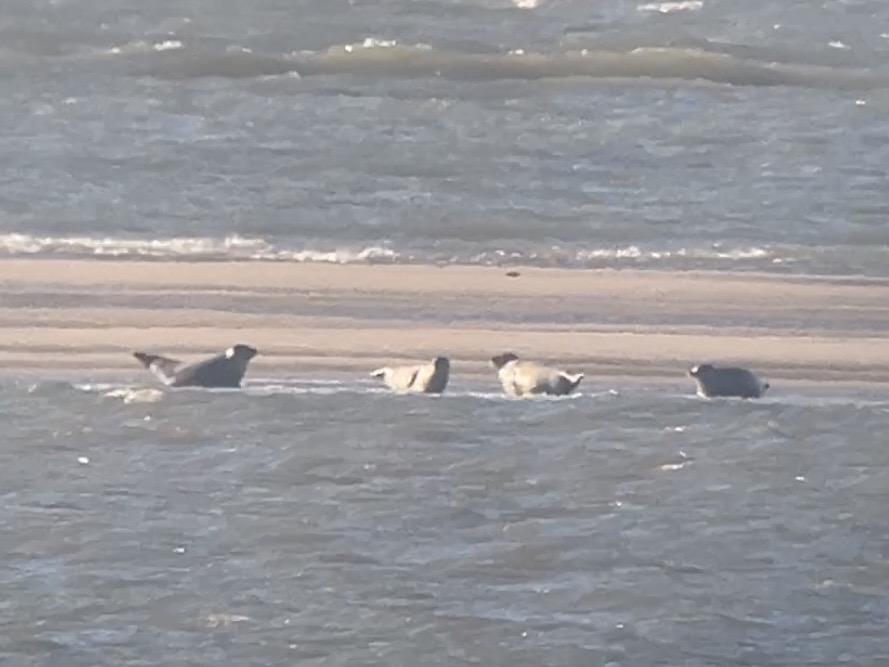 Four Harbor Seals enjoying the sun. Picture by Mathilde Sif Eiby.
At the station: Strummer Edwards, Mathilde Sif Eiby, Anton Ræbild Jensen, Johan Them Steffensen, Storm Hauris Borum
What's better than two ringed Nutcrackers?
lørdag 17. oktober 2026
Observations:
A calm day despite there actually being birds. Today was the first day in a week where we didn’t host any birders out with us on obs. While missing company and relishing in the silence the Huk can provide, we had some cool birds. We had crossing Horned Larks, a Stock dove showing off for the observation team, and the usual shows of Rooks and Jackdaws that have been seen in the area these last days. The highlight of the day was multiple Northern Nutcrackers trying for some migration. The actual number might be up for debate, but counting all seen on the Huk today totaled 7! One was even seen flying right over to our non-standardized nets and resting, but I’ll let the ringers explain how that turned out.
Ringing:
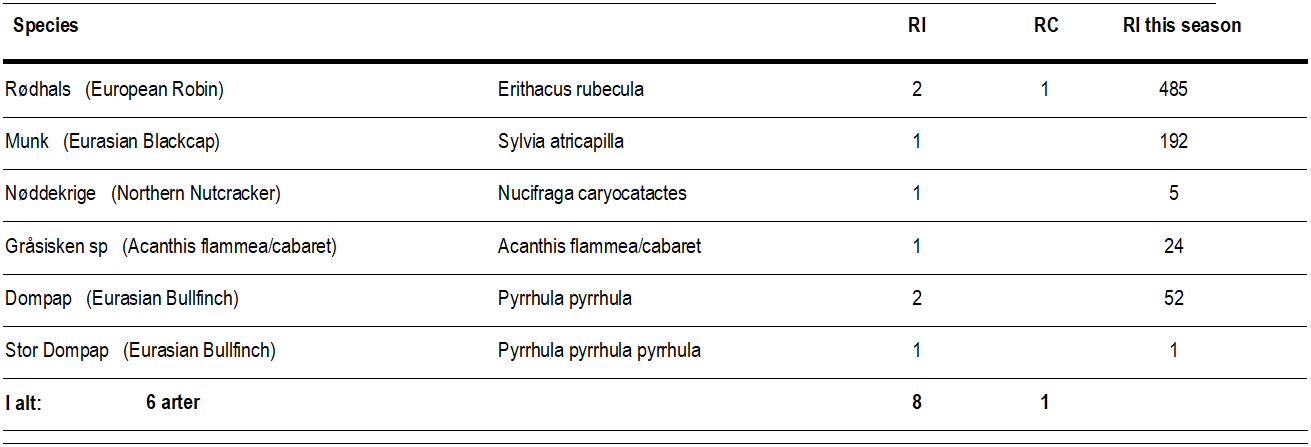
The ringing team only had 9 birds in the nets today, but two were something special! One of them was the significantly larger subspecies of our regular Bullfinch (Dompap) - Pyrrhula Pyrrhula Pyrrhula. The other interesting bird was the station's third ever Nutcracker (Nøddekrige), that Storm got to ring!
Today's numbers:
At the station: Strummer Edwards, Anton Ræbild Jensen, Johan Them Steffensen, Storm Hauris Borum
What's better than 1 nutcracker on the roof? 2 NUTCRACKERS IN THE HAND
fredag 16. oktober 2026
Ringing:
It finally happened. After 40 years of ringing at Blåvand Bird Observatory, we finally got our first nutcracker (Nucifraga caryocatactes). Two, in fact! Through a combined effort of Anton's audio lure and Strummer's dedication to spending hours at the net waiting, Blåvand history was made. This came both the end of the DOF Felttræf and during the final days of Strummer's time at the station, so spirits were high after a not too exciting field season. The nutcrackers were extracted by Strummer and Thomas and ringed by Strummer and Johan.
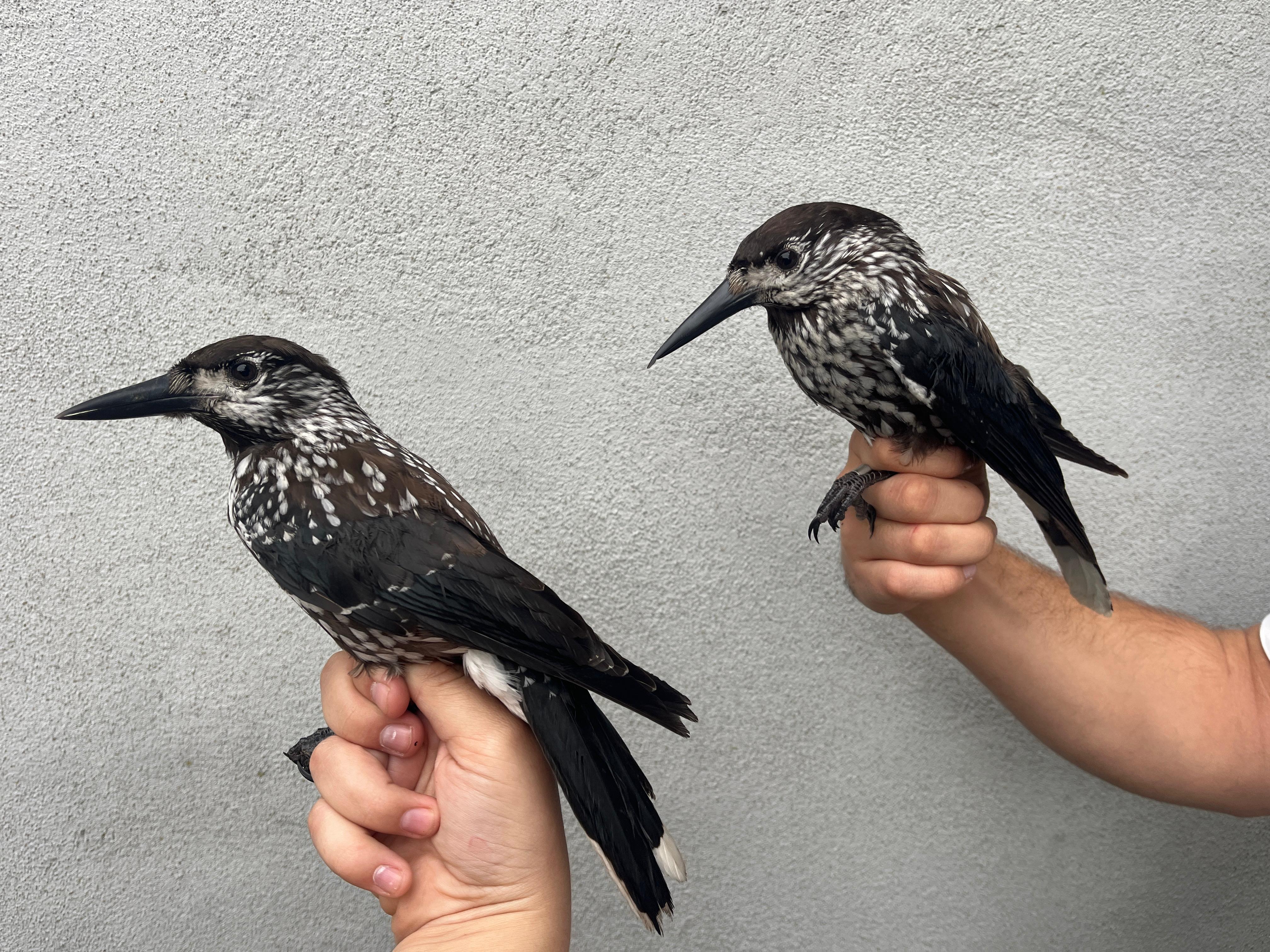
Double nutcracker day! Only a few individuals show up in this area this year, and this is the first time they have been ringed at Blåvand Bird Observatory.
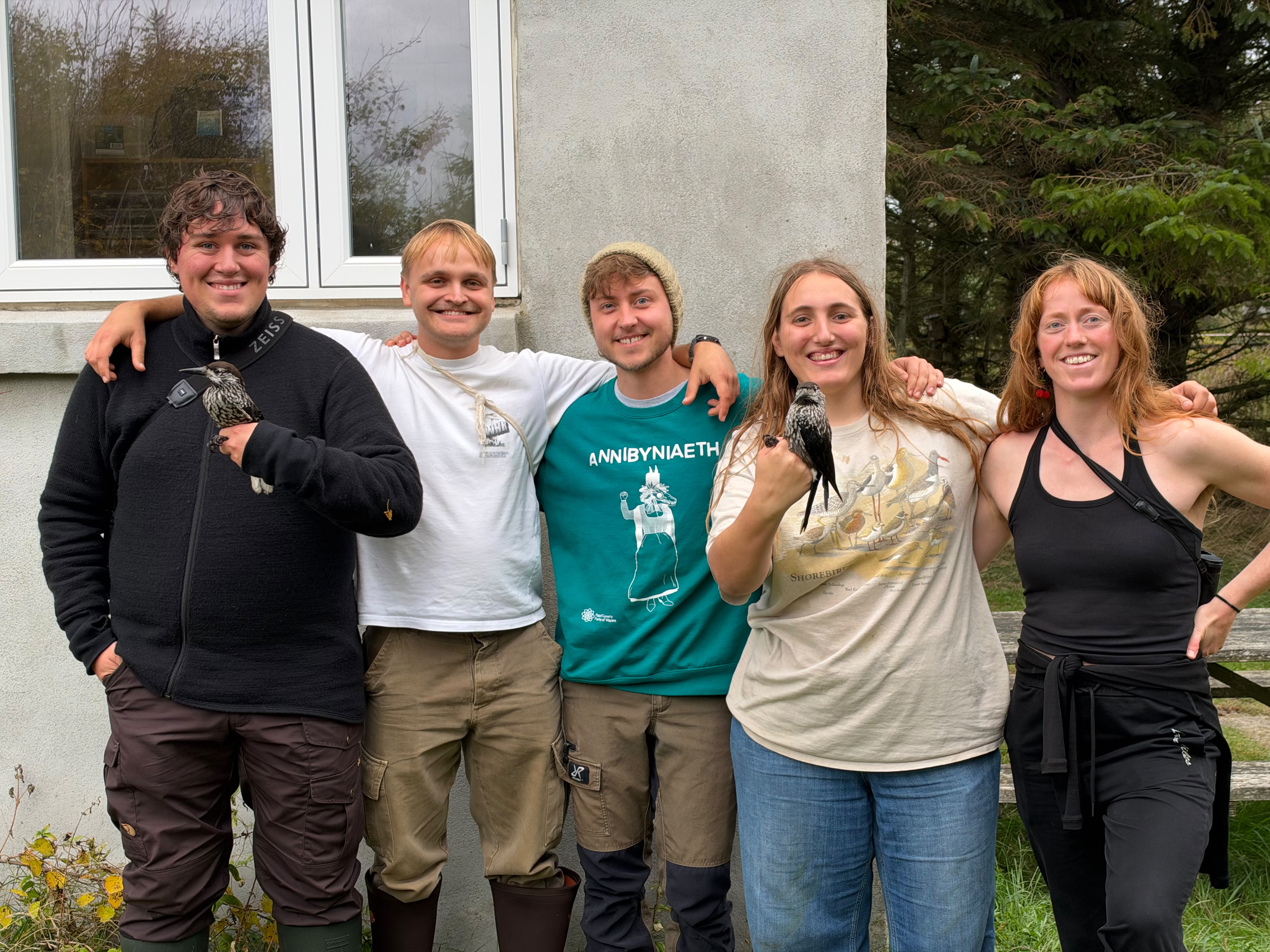
The Blåvand volunteer team: Anton, Johan, Storm, Strummer, Mathilde
The birds attracted a crowd as around 45 people showed up to see them and take pictures. It was a great end to the DOF Felttræf and the first time the bird was seen in the hand for many.
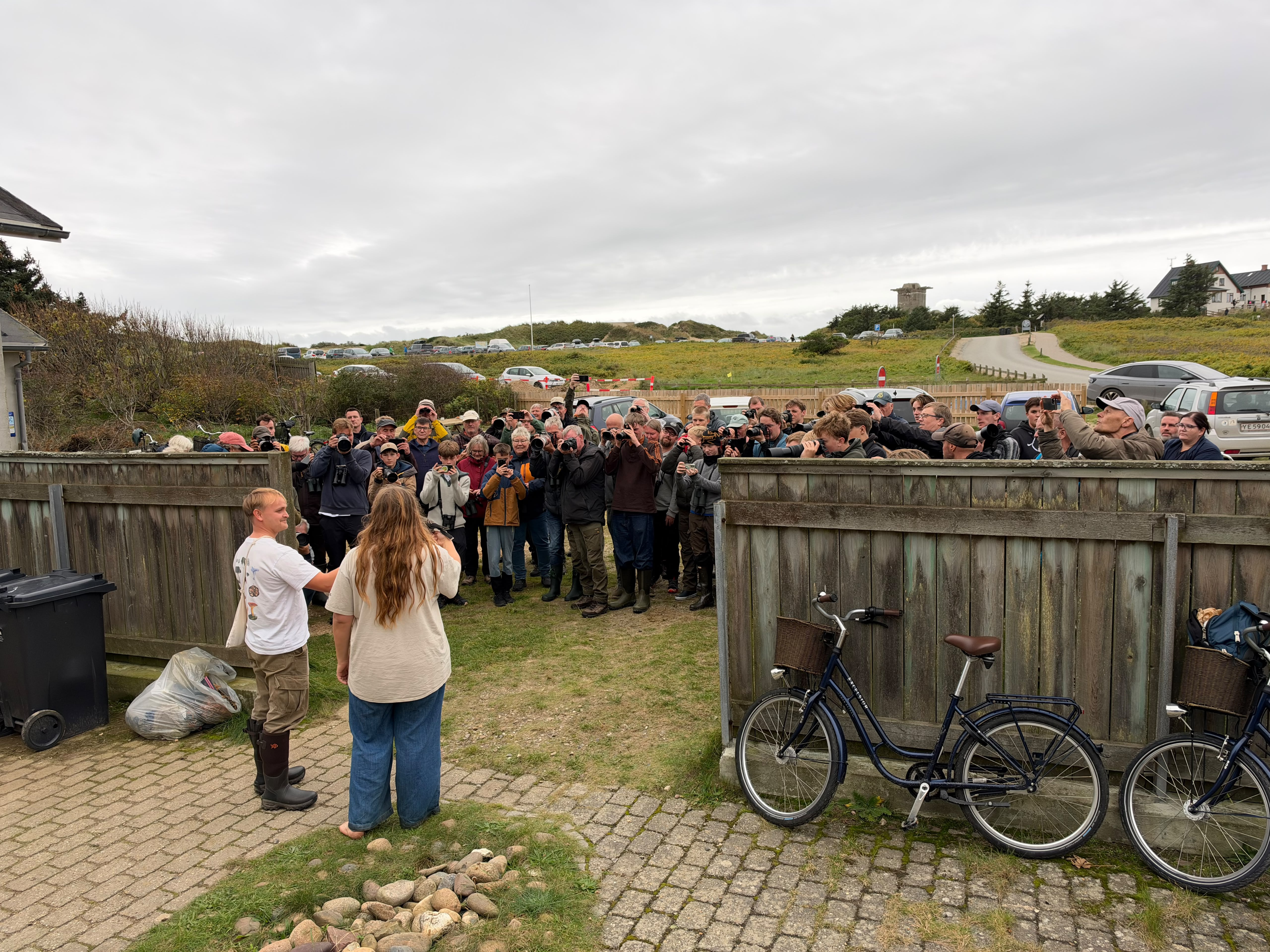
A crowd of DOF and DOF Ung birdwatchers show up to see a nutcracker in the hand.
Apart from the nutcrackers, the ringing went relatively quiet, apart from Johan getting to ring his first sparrowhawk.
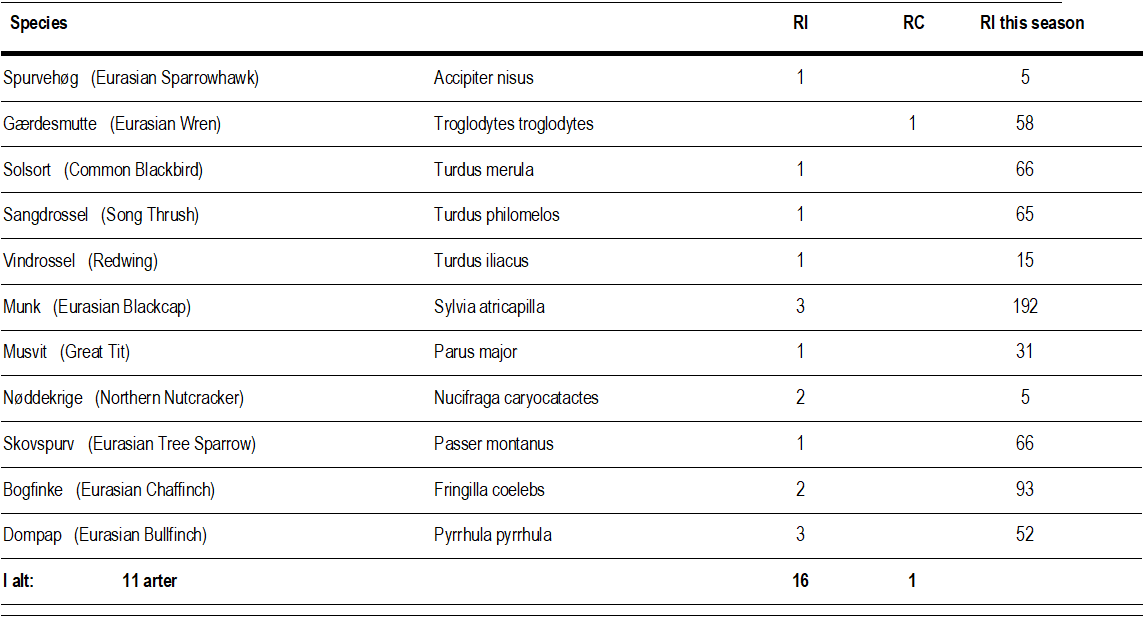
Today's numbers:
Observations:
The obs today was certainly not an obs of all time, to say the least. The wind was blowing mostly from the south, which can be not terrible, but at 9-10 meters per second, it was simply a wind of no birds.
This is clearly reflected in the numbers today, with only 5 Grey Wagtails (Motacilla cinerea), 68 Chaffinches (Fringilla coelebs), 50 Meadow Pipits (Anthus pratensis), 253 Common Scoters (Melanitta nigra), and just about Red-throated Loons (Gavia stellata). The only real notable highlight at obs today was a single Richard’s Pipit (Anthus richardi), only giving off a couple of calls before disappearing into the marsh northeast of obs. Now, a Richard’s Pipit is of course never a species to scoff at, but the quality of the obs wasn’t mind-blowing
All in all, a quite boring day at obs - hopefully the coming week can bring some more interesting winds, and with it, some more interesting birds to obs.
At the station: Strummer Edwards, Anton Ræbild Jensen, Johan Them Steffensen, Storm Hauris Borum
Our fourth Brow
torsdag 15. oktober 2026
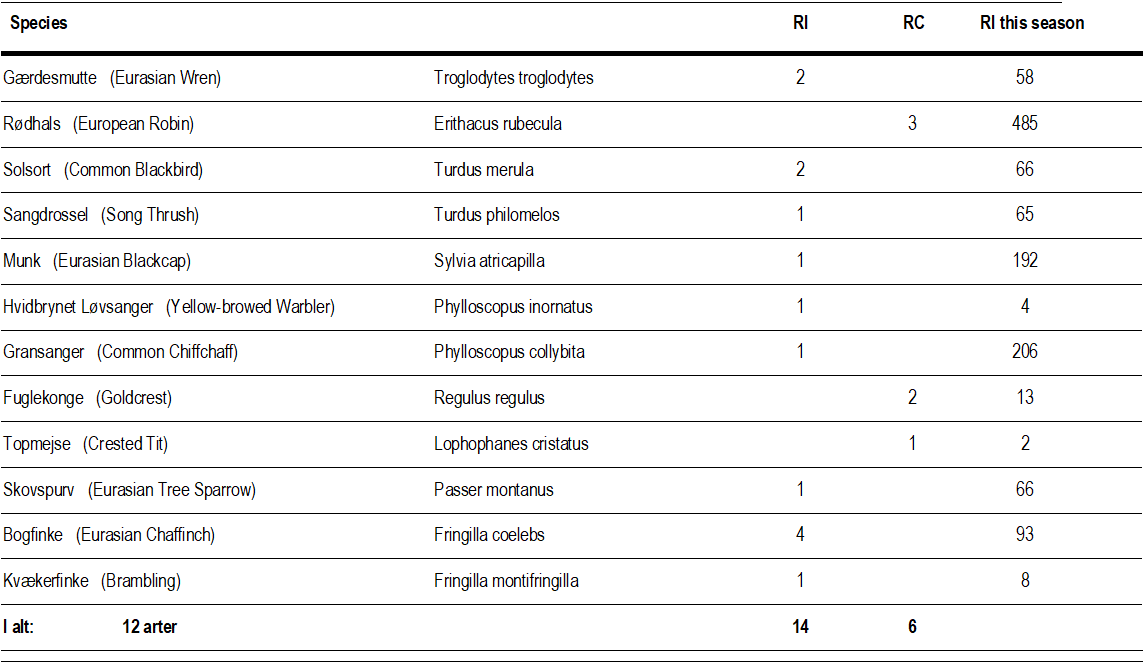
Ringing: A pretty nice day today for ringing despite the wind and low numbers. I (Storm) got to ring my first yellow-browed warbler (Phylloscopus inornatus) and saw my first crested tit (Lophophanes cristatus) in the hand. Both were shown to a small crowd of DOF birdwatchers who were also excited about seeing these species up close.
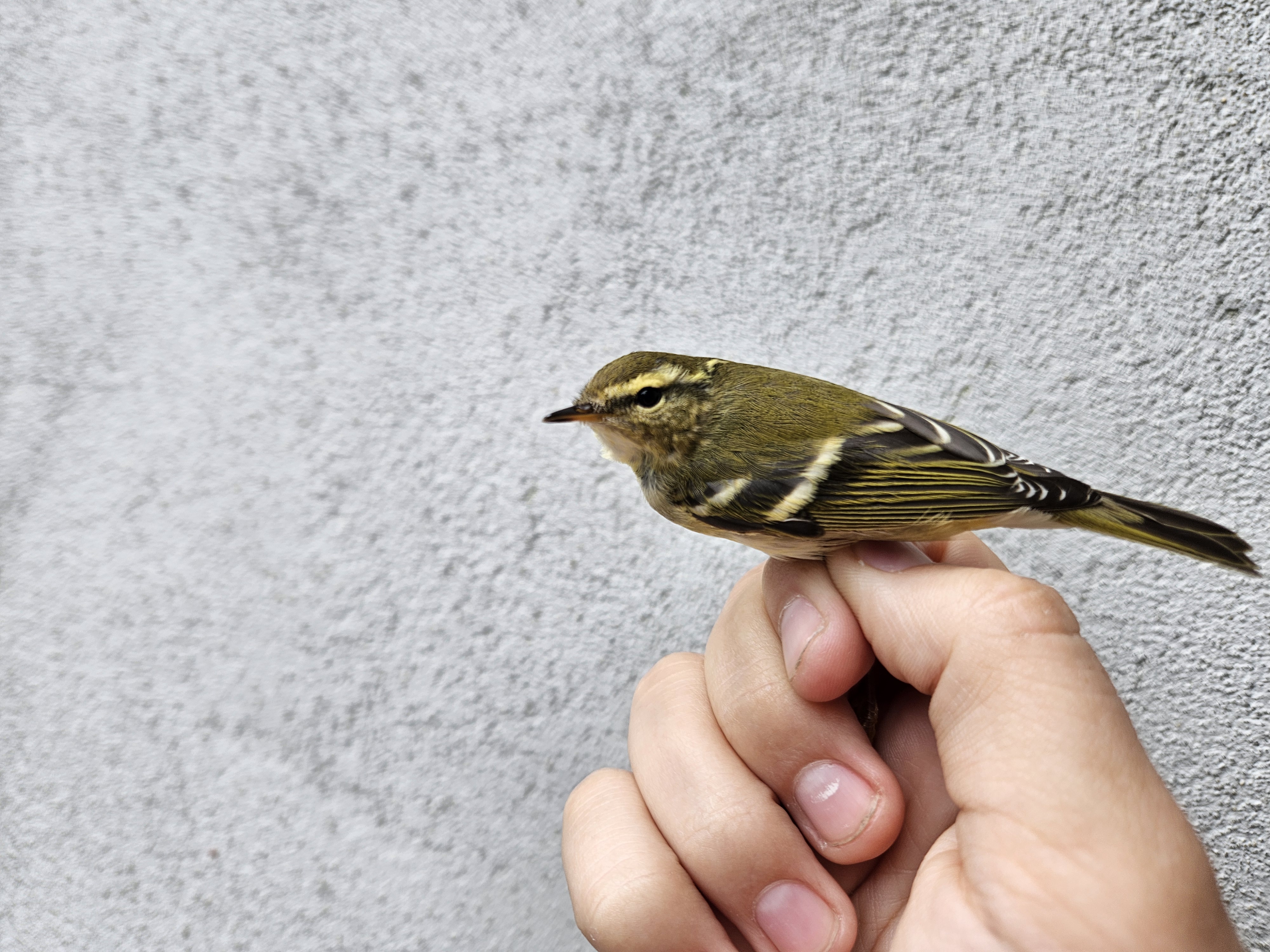
Yellow-browed warbler. A rare visitor, but usually a few are seen and caught in Blåvand. This was the 4th bird ringed here this season.
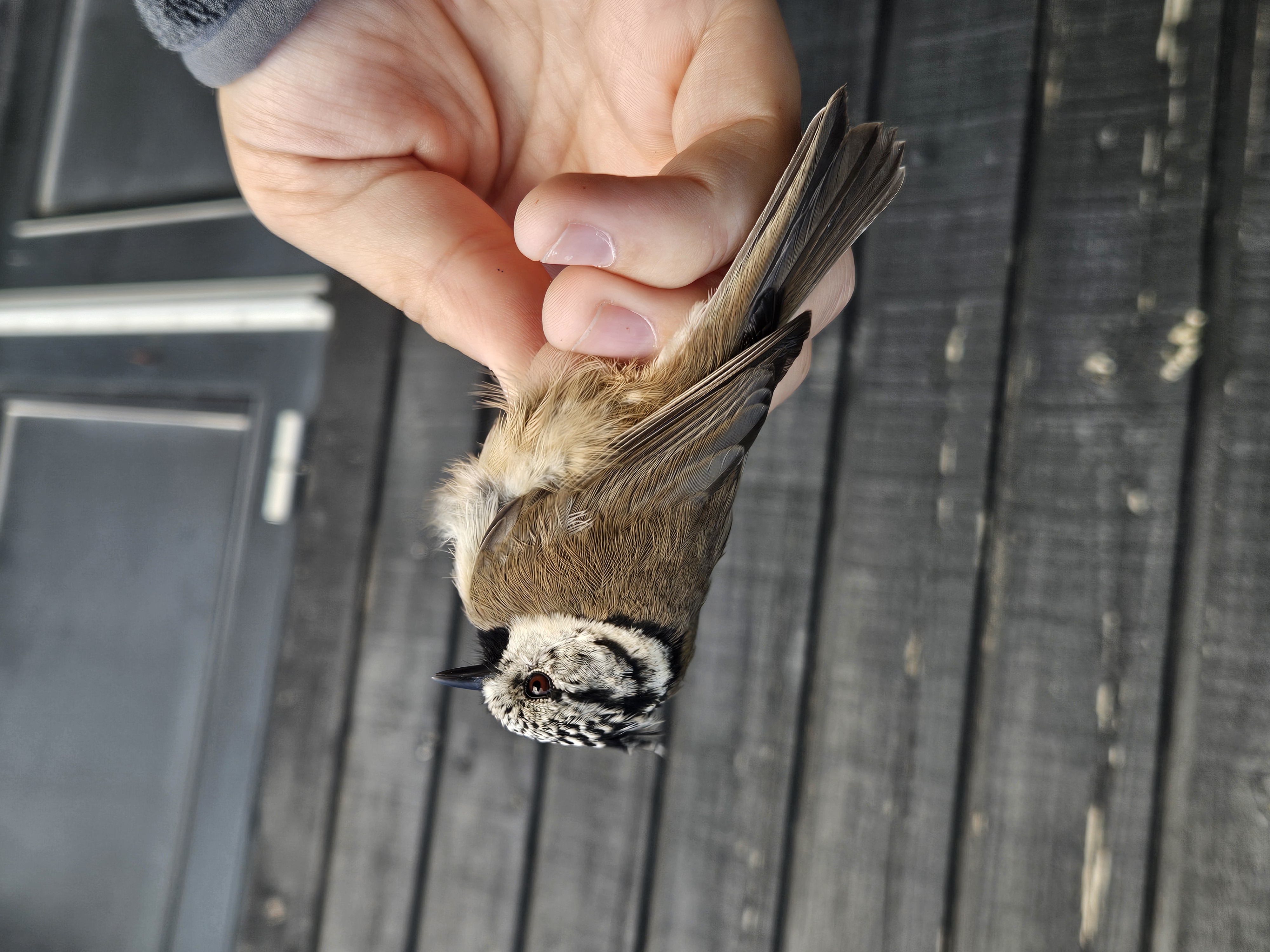
The crested tit is only found in Jylland and on Fyn, and was therefore a hit with birdwatchers from elsewhere in the country, that don't get the chance to see them up close as often.
We also caught two goldcrests, a male and a female at the same time, giving us a great chance to compare the sexes. The way to distinguish them is by the 'crown': males have deep orange feather bases under the yellow in their crown stripe, while females have complete yellow.
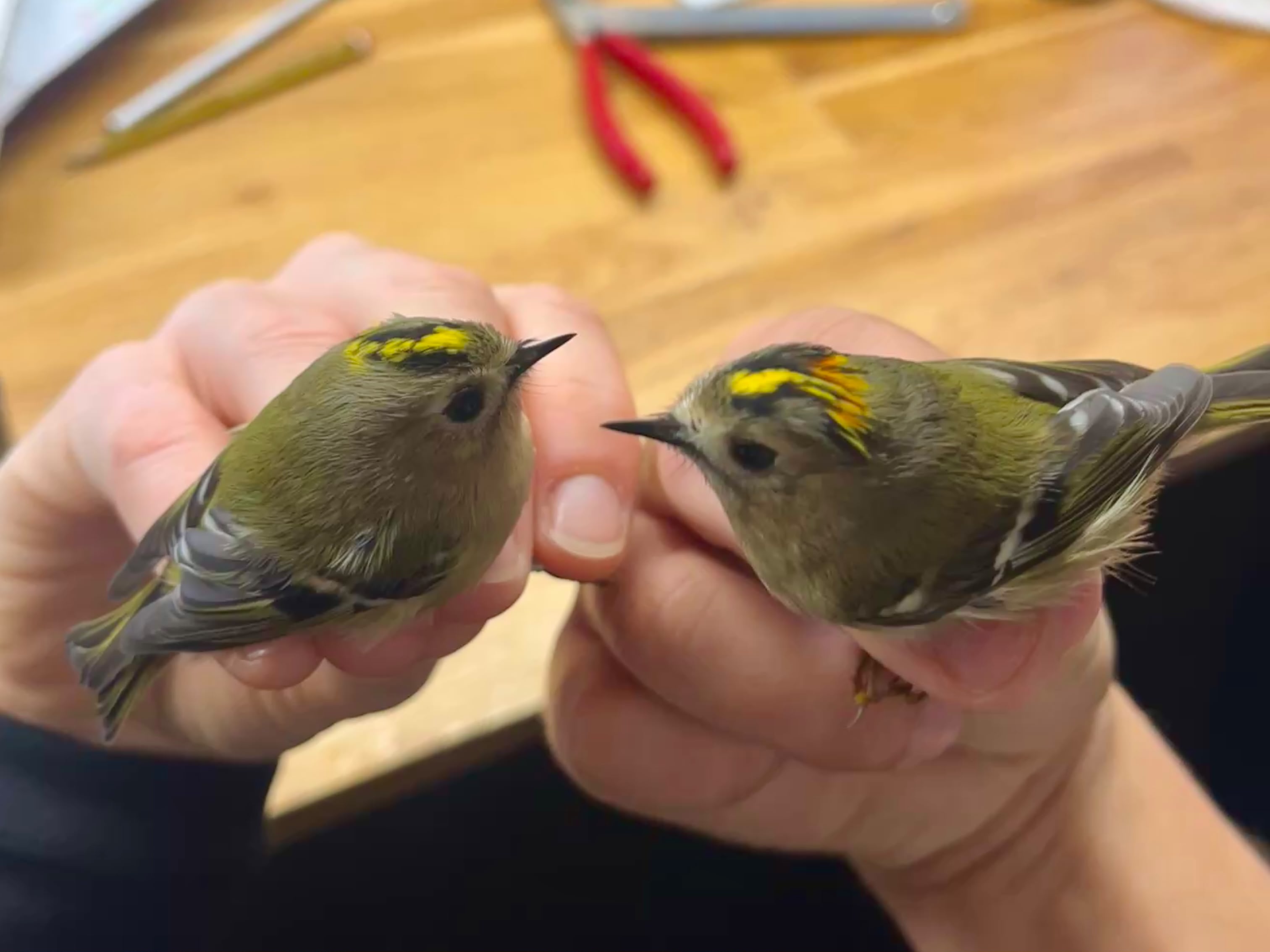
Comparison of female (left) and male (right) goldcrests
Today's numbers:
Observation: Today was a remarkably unremarkable day at obs. The wind was kind of pitifully bad, with 9 meters per second from south-southwest, which is kind of useless at this time of year. And as expected, the obs was mostly a nothingburger.
The usual suspects: Common Scoters (Melanitta nigra), Red-throated Loons (Gavia stelatta), and Meadow Pipits (Anthus pratensis) were few, with respectively 253, 28, and 52 flying by. And besides the one Nutcracker (Nucifraga caryocatactes) visiting us at obs, all the other numbers were pretty pathetic, and honestly… I really don’t want to talk about obs anymore.
In pure desperation for birds, a couple of friends and I went bushwhacking for something (anything!). And after 5 hours of intense birding, we only managed a couple of Yellow-browed Warblers (Phylloscopus inornatus), a single regular Lesser Whitethroat (Curruca curruca) (unluckily not a Blythi or Halimodendri), two Red Crossbills (Loxia curvirostra), and 7 (!) Grey Partridges (Perdix perdix). Not really the hidden treasures we had hoped for, but a decent way to make up for the pathetic obs.
Other things: In the evening, Bent, the old station leader of Blåvand, came by to deliver a talk on bird migration including some history of bird ringing and bird station. We enjoyed hearing his stories and learning about the crazy journeys some birds take on migration.
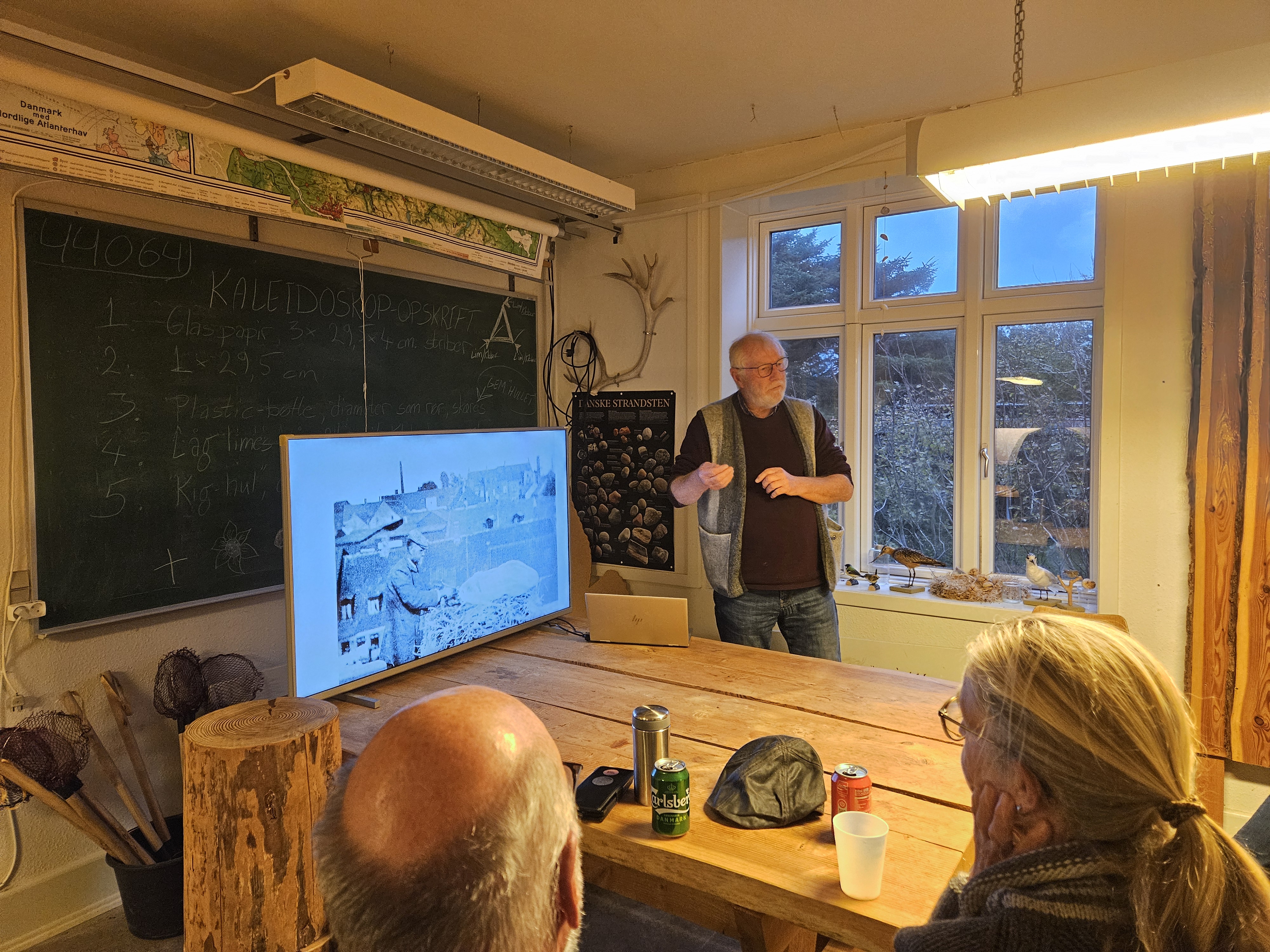
Bent giving a talk on bird migration and how it is being monitored.
At the station: Strummer Edwards, Anton Ræbild Jensen, Johan Them Steffensen, Storm Hauris Borum